
An RFID laundry system only works if the tag survives the laundry, not just the sales pitch. Uniform rental companies, hotels, hospitals, and industrial laundries all ask the same four questions before they order samples: HF or UHF, tag the garment or tag the bag, what does a tag actually cost, and how do you stop it falling off after 50 washes. This guide answers all four, then routes you to the deeper guide for whichever one matters most to your program.
HF or UHF for Laundry RFID? The Volume Threshold That Decides It
The frequency decision comes down to how many items move through a read point at once, not brand preference.
HF/NFC (13.56 MHz) reads one item at a time at close range. It fits pilot programs, boutique operations, and any workflow built around a deliberate tap — checking a single garment in or out at a counter, or verifying a specific item’s history with a smartphone. A ten-piece pilot rack or a small in-house laundry rarely needs more than this.
UHF RAIN RFID (860–960 MHz) reads dozens to hundreds of tags in a single pass without line-of-sight or one-at-a-time handling. This is what makes bulk sorting, conveyor counting, and cart-level inventory practical. Once a program is moving on the order of a thousand pieces through a facility per cycle, UHF is not an upgrade — it is the only format that keeps counting from becoming a bottleneck.
| Scale | Typical frequency | Why |
|---|---|---|
| Pilot rack or small in-house laundry (roughly 10–200 pieces) | HF/NFC | Deliberate single-item scans; no need for bulk read speed |
| Uniform rental program or mid-size hospitality laundry (roughly 200–1,000 pieces) | UHF, sometimes hybrid pilot in HF | Cart or bin-level counting starts to matter |
| Industrial, hospital, or multi-site laundry (1,000+ pieces per cycle) | UHF | Conveyor and tunnel-washer throughput requires bulk anti-collision reads |
A useful rule of thumb: if the workflow involves picking up a whole cart, bin, or bag and asking “what’s in here,” that’s a UHF question. If it involves one item and one scan, HF/NFC answers it just as well for less.
Tag the Garment or Tag the Bag?
This is the second decision buyers skip past, and it changes the whole program.
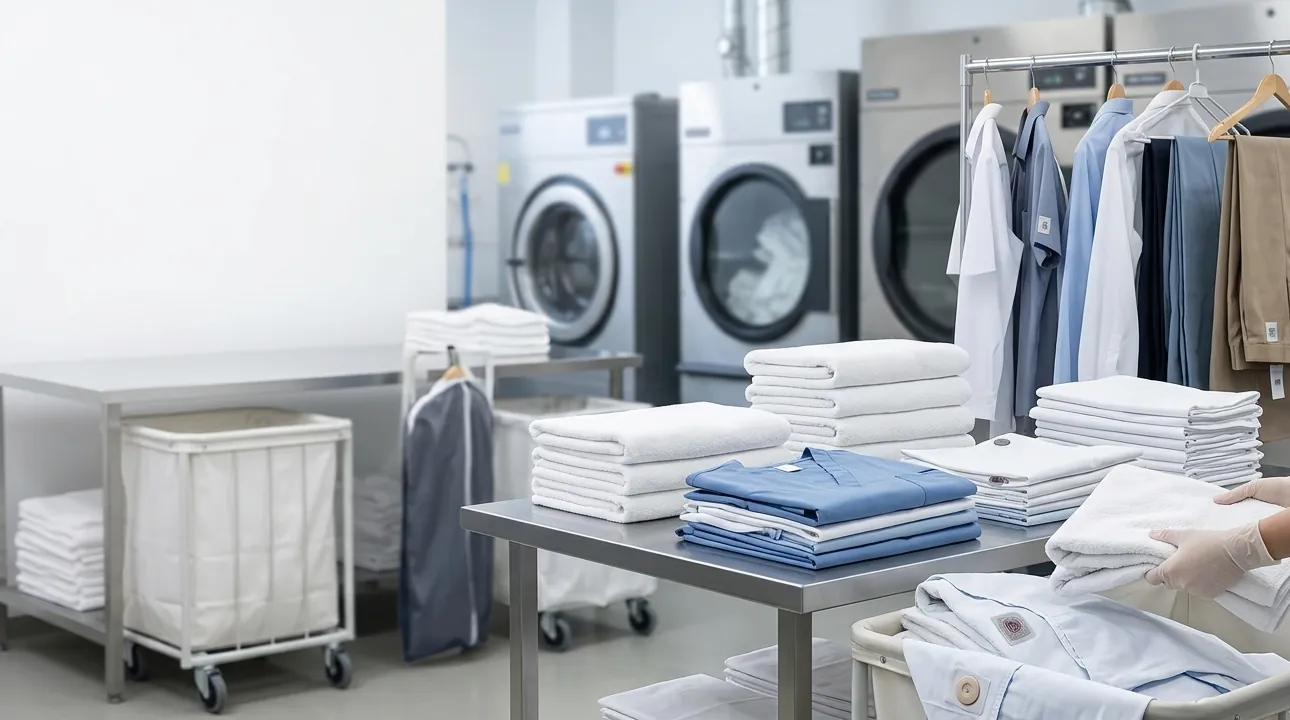
Tagging the garment or linen item directly gives item-level history — wash count, ownership, rental status, and loss tracking down to the individual piece. It is the only option when the business case depends on knowing what happened to this specific garment, such as rental billing, warranty tracking on workwear, or infection-control laundry chains in healthcare. It also means every garment needs a sewn, heat-sealed, or embedded tag that survives the same wash program as the fabric.
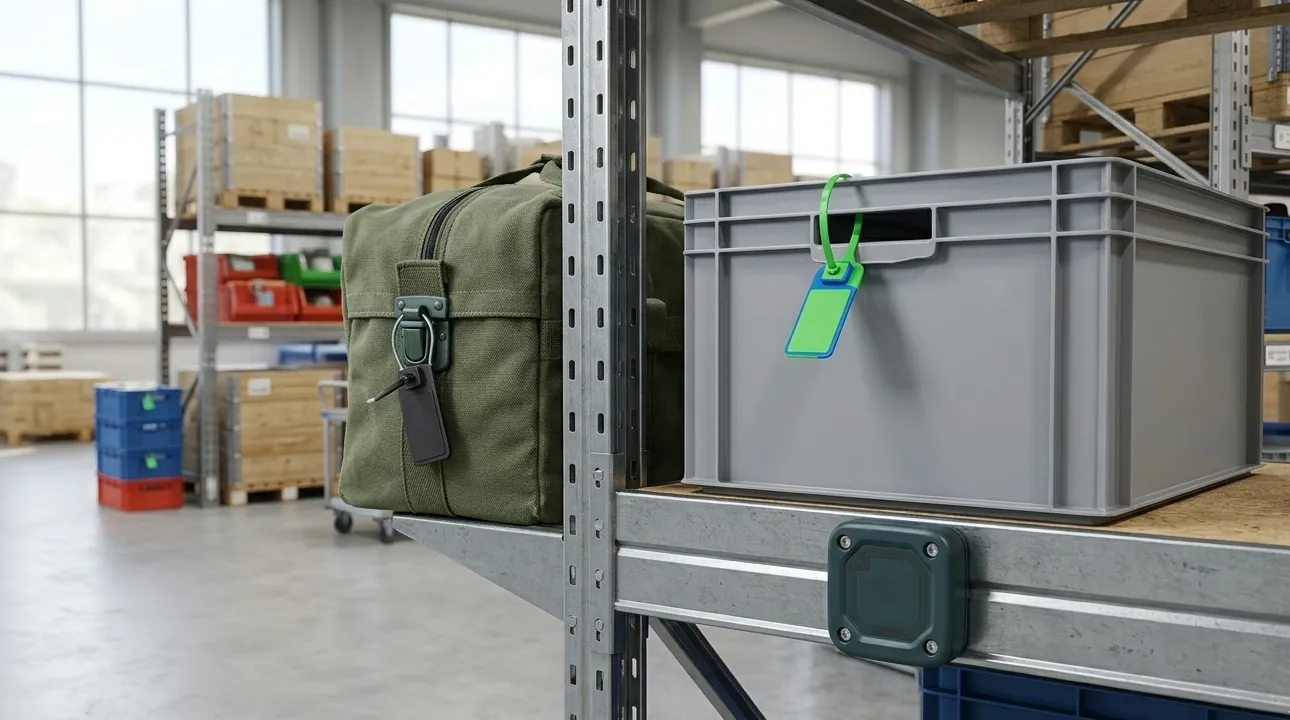
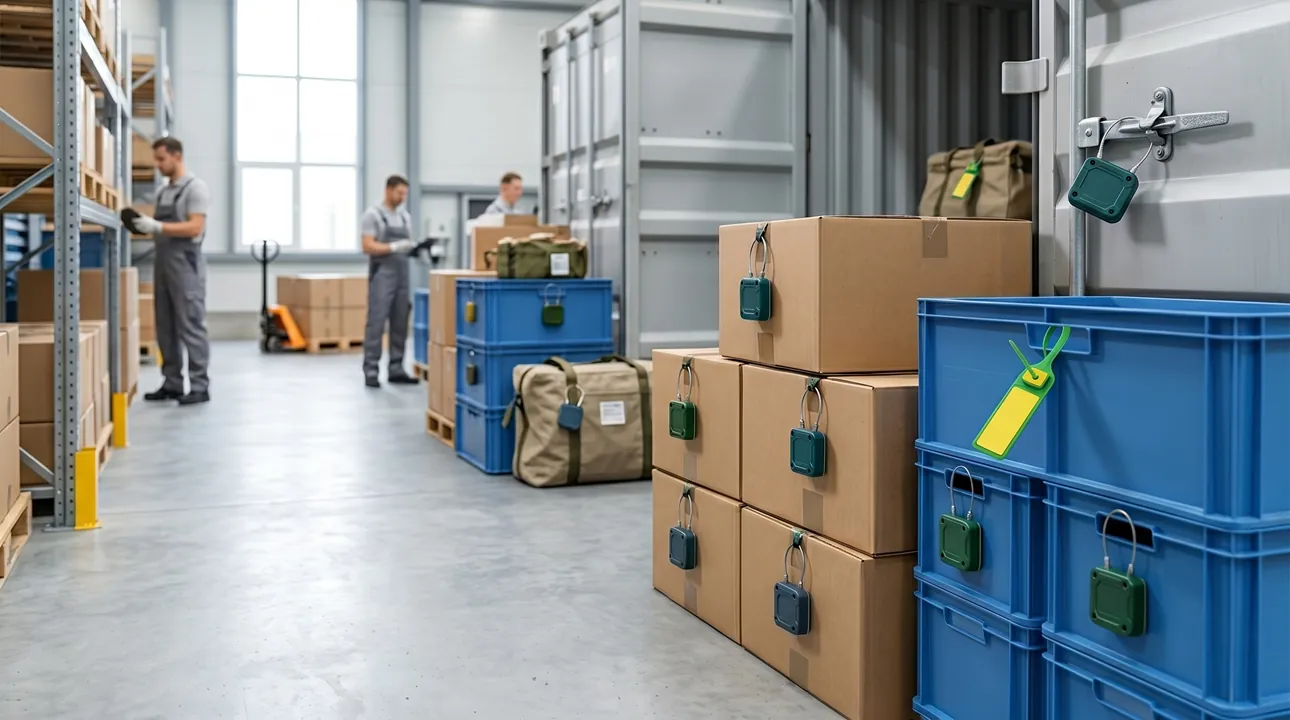
Tagging the transport bag or cart is cheaper to deploy and easier to retrofit, because a facility only tags a fixed number of reusable containers instead of every garment. It tracks batches, not individuals — useful for route accounting, load verification, and confirming a delivery is complete, but it cannot tell you which garment inside the bag has been laundered 40 times versus 4.
Most mature programs end up doing both: item-level tags on garments that need individual accountability (rental uniforms, patient gowns, high-value linen), and bag- or cart-level tags for everything that only needs batch tracking. Deciding this up front avoids re-tagging a facility six months into the program.
What Actually Drives Laundry RFID Tag Cost
Laundry tags are custom-quoted, not catalog-priced — construction, wash rating, and volume all move the number, and any flat per-tag figure you find online is answering someone else’s specification. What is predictable is the order the tiers fall in:
| Tag class | Relative unit cost | What you’re paying for |
|---|---|---|
| Standard washable woven or PPS label (moderate wash count) | Lower | Basic encapsulation rated for typical commercial-laundry chemicals and temperatures |
| Silicone or reinforced PPS laundry tag | Mid | Higher wash-cycle rating, better resistance to pressing and mechanical stress |
| High-temperature / autoclave-rated tag | Higher | Construction rated for sterilization heat and pressure, common in healthcare textile chains |
| Small-batch or heavily customized tag (unusual size, printing, or wash rating) | Highest | Tooling and low-volume surcharge on top of the base construction tier |
Two variables move a program between tiers more than any other: wash-cycle rating (a tag rated for 50 washes and one rated for 300+ are different constructions, not the same tag priced differently) and order volume (a ten-piece pilot pays a sampling premium that a 5,000-piece order does not). Attachment method also affects landed cost — a tag that must be factory-sewn during garment production adds labour cost that a heat-seal or clip-on tag does not.
Because every laundry program’s fabric, wash chemistry, and cycle count are different, RFIDEcho quotes against your actual specification rather than a published price list. Share your garment type, wash program, and target volume through contact RFIDEcho for an accurate quote — see the RFQ checklist below for exactly what speeds that up.
How to Keep Tags From Falling Off Through Hundreds of Wash Cycles
Tag loss is the single most common reason a laundry RFID pilot underperforms, and it is almost always an attachment or placement problem rather than a chip failure.
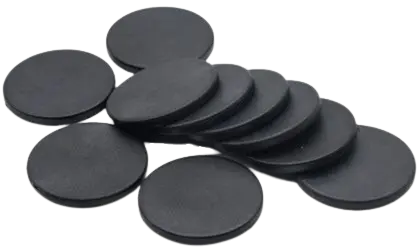
- Match the attachment method to the garment construction. Sewn labels integrate best into seams and hems during production; heat-seal tags work on fabrics that tolerate the sealing temperature; clip or slot tags suit reusable bins and hangers rather than garments themselves.
- Keep the tag out of high-stress zones. Repeated folding creases, pressing plates, and high-pressure extraction points are where laundry tags fail first — placement should avoid the garment’s primary fold line.
- Confirm the wash program before ordering, not after a failure. Water temperature, chemical exposure, tumble mechanics, and pressing/ironing steps all stress a tag differently; a tag rated for home laundering will not survive commercial steam pressing.
- Test in the real wash cycle, not a lab approximation. A facility’s actual detergent, water hardness, and machine loading can behave differently than a standardized test cycle.
For the detailed wash-cycle testing data and temperature thresholds, see how RFID laundry tags survive 200+ wash cycles.
System Selection: What a Laundry RFID Program Actually Needs Beyond Tags
A laundry RFID system is a read-point problem as much as a tag problem. Before specifying tags, map where reads need to happen:
- Sort or receiving point — where soiled items enter the system and need identification before washing.
- Wash-cycle boundary — some programs verify tags survive the wash by reading before and after.
- Fold or pack-out point — where clean items are counted and matched back to a customer, room, or department.
- Delivery or issue point — where garments or linen are checked out to a wearer, room, or route.
Each read point needs a reader suited to its throughput: a handheld or fixed tunnel reader for bulk conveyor counts, or a simple fixed or handheld reader for one-at-a-time issue points. Software integration — connecting reads to a billing system, a property management system, or an inventory database — usually matters more to program ROI than the tag’s unit price, because it is what turns “the tag was read” into “the customer was billed correctly” or “this garment needs replacement.”
RFQ Checklist for Laundry RFID Tags
Send these details to get an accurate quote on the first pass:
- Garment or linen type — uniform, patient gown, table linen, towel, rental workwear, or mixed program.
- Wash program — temperature, chemical exposure, cycle count target, and whether autoclave/sterilization is required.
- Attachment method — sewn, heat-seal, clip, or embedded during manufacture.
- Frequency requirement — HF/NFC or UHF, based on your read-point volume.
- Read points — where in the workflow tags need to be scanned, and expected read count per cycle.
- Data requirement — EPC serialization, visible numbering, barcode/QR matching, or integration with an existing billing or inventory system.
- Quantity — pilot quantity, then annual bulk volume by garment type.
The Complete Laundry & Uniform RFID Guide
This page is the starting point for laundry and apparel RFID programs. Each guide below goes deeper on one part of the decision:
| Guide | What it covers |
|---|---|
| How RFID laundry tags survive 200+ wash cycles | Wash temperature, cycle count, and durability testing data |
| How RFID laundry tags improve operational efficiency in hospitality | The operational case for hotel and hospitality linen programs |
| Sewn-in RFID tags for apparel | Sewn-in tag formats, placement, and production checks for garments |
| NFC garment badge vs RFID laundry tag | When a badge-style NFC tag fits better than a sewn laundry tag |
| Custom RFID laundry care labels | Care-label format tags and customization options |
| Apparel retail RFID deployment challenges | Deployment planning for retail apparel programs adjacent to laundry/rental |
| RFID autoclave tags | Sterilization-rated tags for healthcare textile chains |
| Will RFID tags on clothing set off store anti-theft gates? | Why RFID and EAS are different systems, and when cross-triggering happens |
For the wider system view, see the RFID laundry management solution page and the RFID laundry tags category.
FAQ
Is RFID laundry tracking HF or UHF?
Both are used. HF/NFC fits small pilots and deliberate single-item scans. UHF fits bulk sorting, conveyor counting, and any program moving roughly a thousand or more pieces per cycle, because it can read many tags at once without individual handling.
How much does an RFID laundry tag cost?
There is no fixed price — construction tier, wash-cycle rating, and order volume all move it, and laundry tags are custom-quoted against your specification. Share your garment type, wash program, and volume for an accurate quote.
Do I tag each garment or the laundry bag?
Tag garments individually when you need item-level history, such as rental billing or infection-control chains. Tag bags or carts when you only need batch-level tracking. Many programs use both for different garment categories.
How many wash cycles can an RFID laundry tag survive?
It depends on construction. Standard washable tags are commonly rated for dozens of commercial cycles, while silicone or PPS tags built for heavier use can be rated for 200 or more, and autoclave-rated tags add sterilization survivability on top of wash survival.
What causes RFID laundry tags to fail early?
Mismatched attachment method, placement in a high-fold-stress zone, and specifying a tag rated below the facility’s actual wash temperature or chemical exposure are the most common causes — not chip failure.