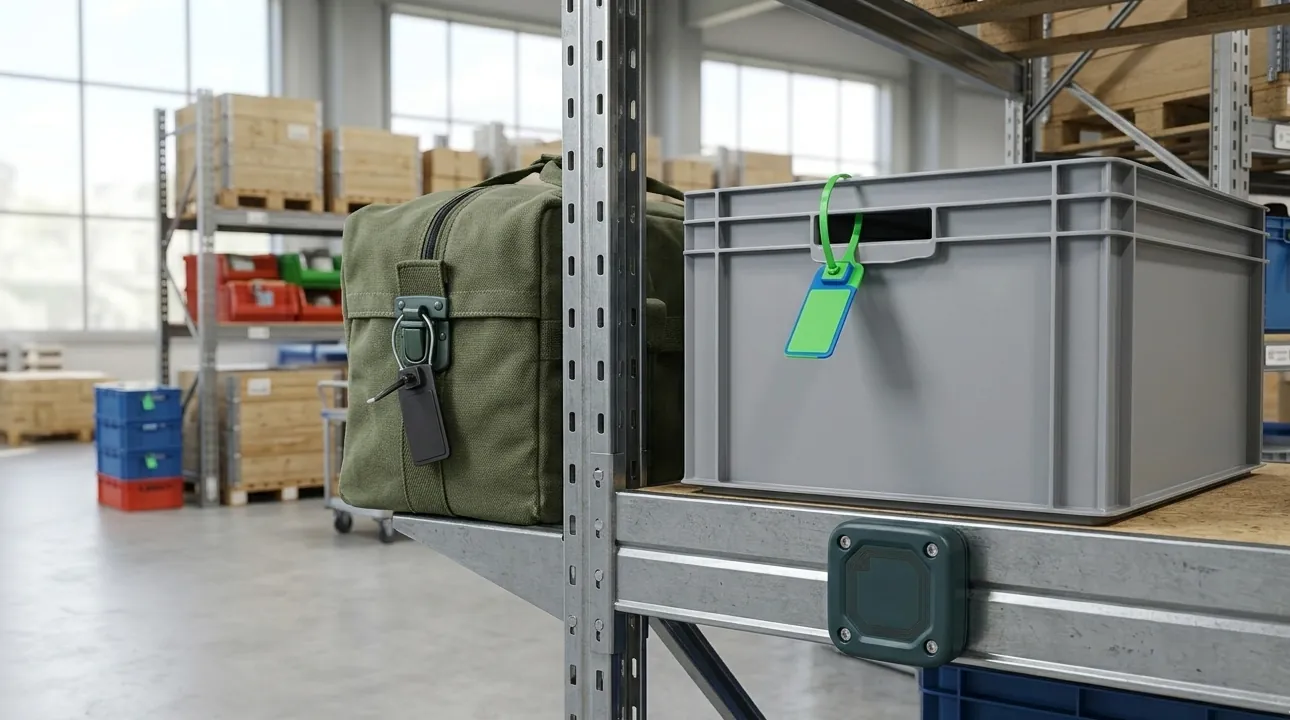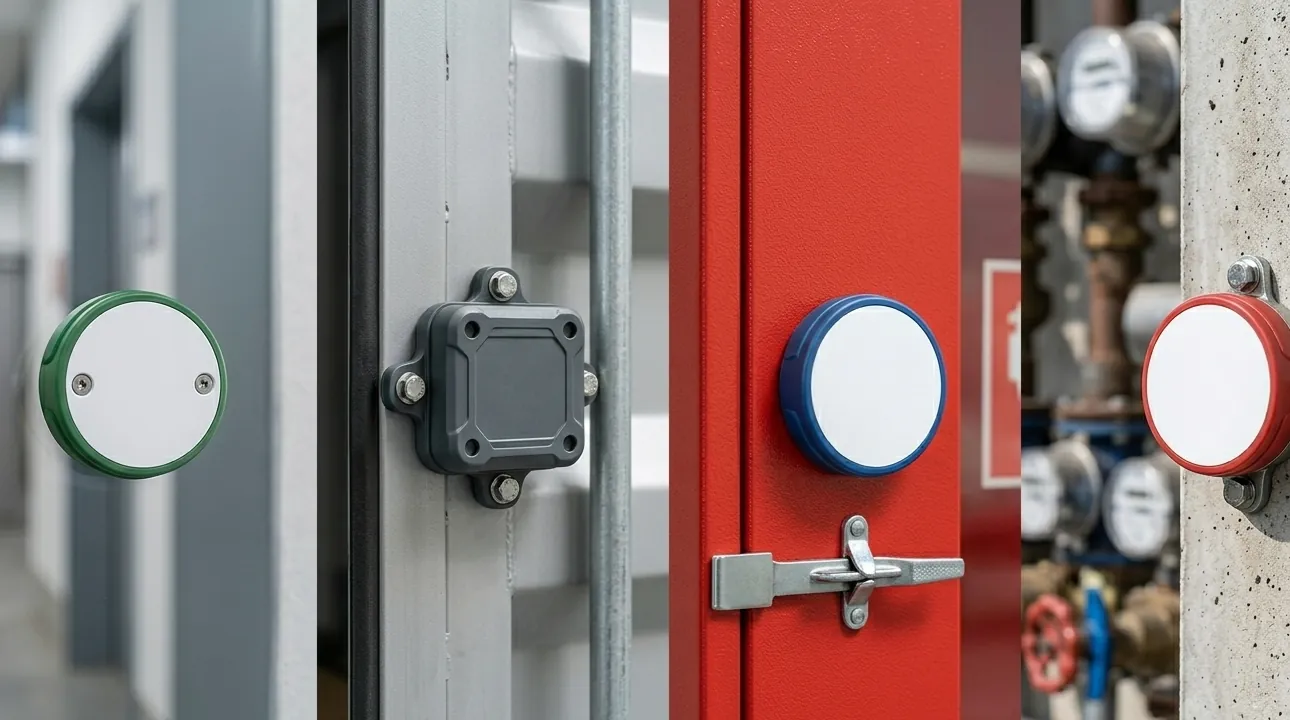

An RFID tag spec sheet is mostly encapsulation, material, and dimensions — and it’s the section buyers skim past fastest, because “rugged” and “industrial-grade” sound like enough information on their own. They aren’t. Two tags that look identical in a catalog photo can have completely different encapsulation, and the one that isn’t rated for your actual environment will fail in the field even though the chip inside is fine. This is a guide to reading past the marketing language to the numbers that actually predict survival.
What “Encapsulation” Actually Means
Encapsulation is the housing around the chip and antenna, and it’s what determines whether the tag survives its environment — not the chip. Common types:
- Adhesive label (PET or PVC face stock) — thin, flexible, lowest cost, fine for indoor use on cardboard or plastic; the weakest option for outdoor UV, moisture, or abrasion
- Epoxy or resin-potted housing — the chip and antenna are fully encased in a solid resin block, giving strong protection against impact, moisture, and chemical exposure; used for harsher indoor/outdoor environments
- Hard ABS or polycarbonate case — a molded shell, often screw-mountable, built for repeated handling, impact, or environments where a flat label would get torn or scraped off
A spec sheet that just says “durable” without naming one of these categories hasn’t actually told you anything checkable.
Choosing Material for Heat and Sun Exposure
Standard PVC or PET adhesive tags degrade under continuous outdoor UV exposure — the adhesive can fail and the face stock can become brittle well before the chip itself stops working. For sustained outdoor placement or proximity to engines, machinery, or direct sun, ask for two specific numbers rather than the word “outdoor-rated”: the continuous operating temperature range and whether the encapsulation has a UV-stabilized formulation. Tags built for high-heat or engine-adjacent mounting typically use polyimide-based face stock or ceramic-based construction rather than standard PVC, because those materials hold up at sustained temperatures that would deform or discolor a standard label. If the tag will sit in direct sun for years rather than months, the UV rating matters as much as the temperature rating — a tag can survive the heat and still fail early from UV-driven material breakdown.
Windshield and Glass-Mount Tags: Appearance and Mounting Options
Glass-mount tags — used for vehicle ID, fleet access, and toll-style applications — come with appearance trade-offs that don’t apply to tags mounted out of sight:
- Standard adhesive-backed label — visible, lowest cost, easiest to apply and replace
- Low-profile or semi-transparent construction — reduces visual footprint for appearance-sensitive placement (customer-facing vehicles, retail-adjacent fleets) at a moderate cost premium
- One-way, destructible adhesive — the tag tears or shows visible damage if someone tries to peel and re-apply it elsewhere, which matters for access-control or anti-tamper use cases rather than pure asset ID
Glass-mount tags also read differently than tags on cardboard or plastic — confirm the read range quoted is for glass mounting specifically, since RF performance changes measurably by substrate.
Size and Form Factor Trade-offs
Antenna size drives read range more than any other physical dimension — a larger tag generally reads farther, especially at range or through material, because it has more room for antenna length. That creates a real trade-off: a smaller, more discreet tag is easier to mount inconspicuously but will read at shorter range than a larger tag with the same chip. Hard-cased tags in particular vary widely — a compact bolt-on tag prioritizes mounting flexibility over range, while a larger panel-style hard tag prioritizes range and durability over discreet placement. Match the form factor to which of those two things — mounting flexibility or read range — actually matters more for the specific asset.
A Spec-Reading Checklist Before You Order
Before ordering samples, confirm the spec sheet actually states:
- Encapsulation type — adhesive label, resin-potted, or hard case
- Operating temperature range — the actual continuous range, not “high-temperature”
- Ingress protection (IP) rating — if the tag will face water, dust, or washdown exposure
- UV/outdoor rating — separate from temperature rating, relevant for anything in direct sun long-term
- Substrate the read range was tested on — glass, metal, cardboard, and plastic all produce different real-world ranges from the same tag
- Physical dimensions and mounting method — adhesive, screw-mount, or embedded, and whether that suits the asset’s handling and appearance requirements
For the frequency and chip decisions that pair with these material choices, see the full RFID tag selection framework, or browse custom RFID tags to match a spec to your environment.
FAQ
What does “encapsulation” mean on an RFID tag spec sheet?
It’s the housing around the chip and antenna — typically an adhesive label, a resin-potted block, or a hard molded case — and it’s what determines the tag’s durability against impact, moisture, heat, and UV, not the chip inside.
How do I choose an RFID tag for high-heat or sun exposure?
Ask for the continuous operating temperature range and a separate UV-stabilization rating rather than relying on the word “outdoor-rated.” High-heat, engine-adjacent placements typically need polyimide or ceramic-based construction instead of standard PVC.
Do windshield RFID tags come in different visibility options?
Yes — standard visible adhesive labels, low-profile or semi-transparent versions for appearance-sensitive placement, and one-way destructible adhesive versions built for tamper evidence rather than discreet appearance.
Does a smaller RFID tag read as far as a larger one?
Not usually. A larger tag generally has more room for antenna length, which reads farther, especially through material or at range. Smaller tags trade some read range for easier, more discreet mounting.