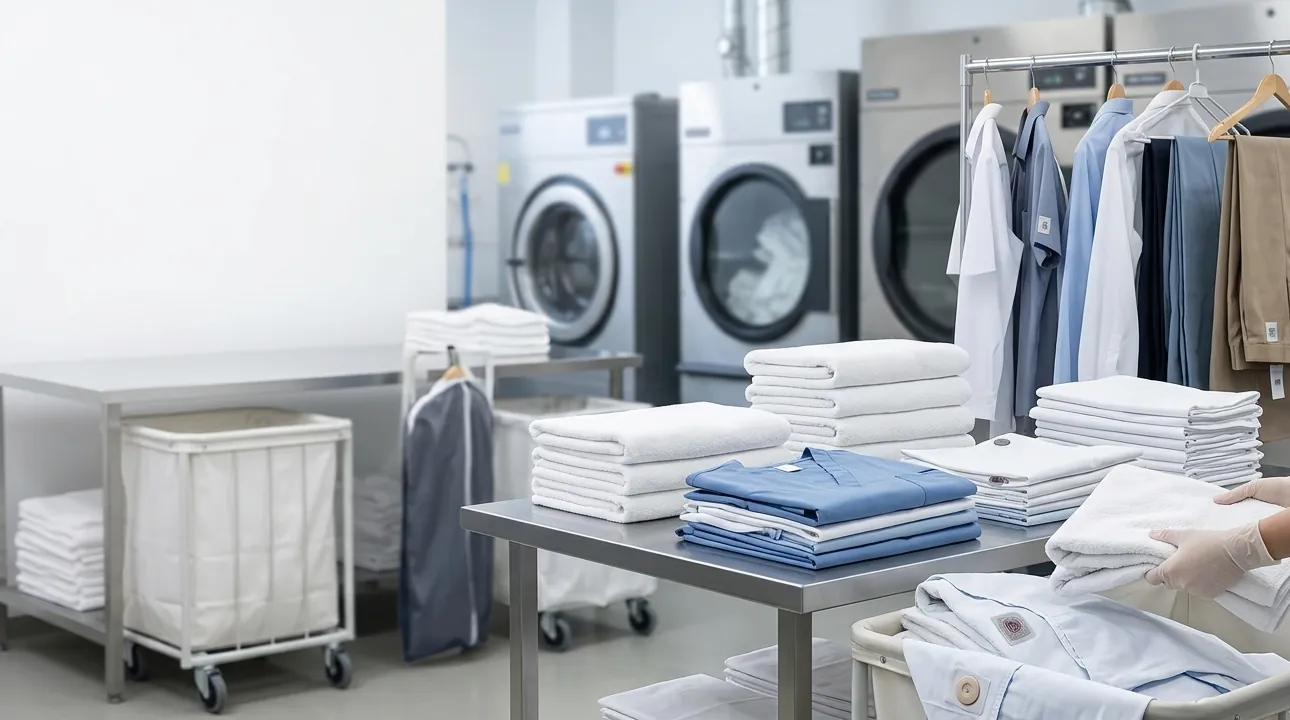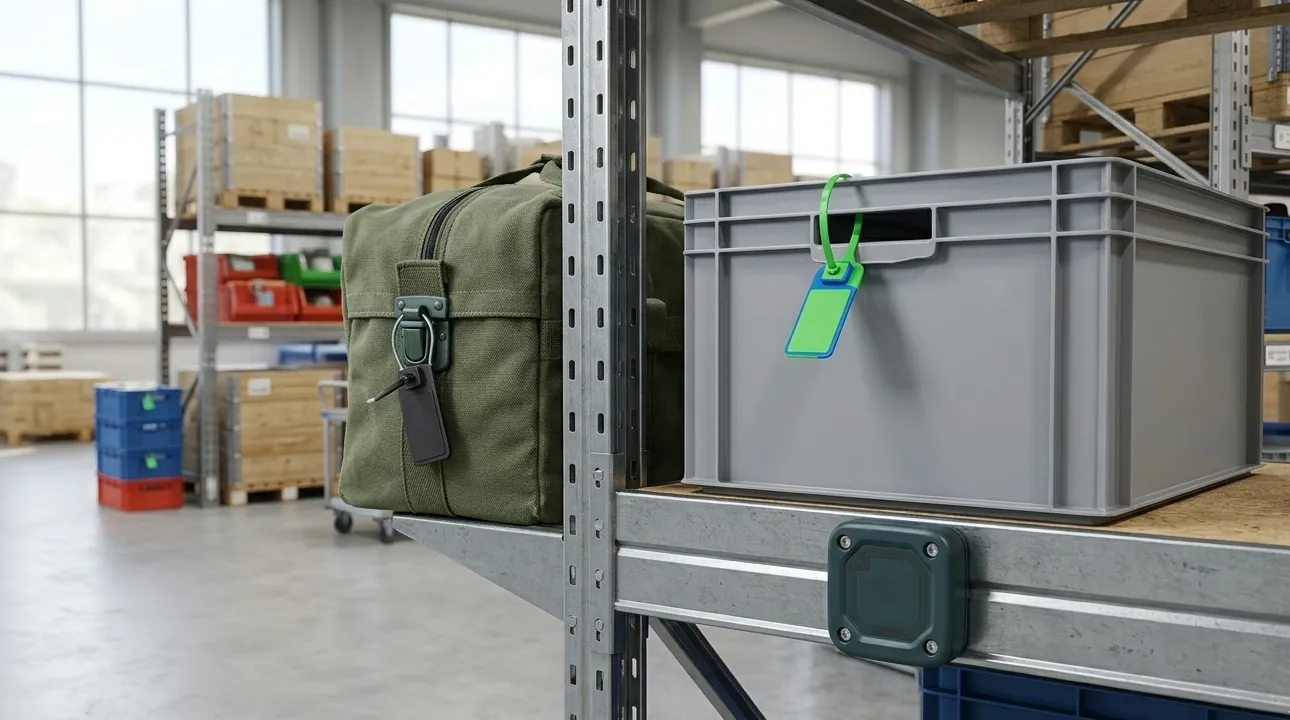
Linen loss and manual counting are two of the largest hidden costs in hotel housekeeping and laundry. RFID linen tracking attacks both: by giving every towel, sheet, robe, uniform, and banquet linen a durable digital identity, hotels replace slow manual counts with fast bulk scans, trace where linen disappears, and settle billing disputes with an outsourced laundry using data instead of guesswork.
This is an operations guide focused on the business outcomes — loss, labor, PAR stock, and vendor accountability. For choosing and specifying the tags themselves, see the companion Custom RFID Laundry Care Labels buyer’s guide or the full RFID for laundry and uniform rental guide, and for how the tags, readers, and workflow fit together end to end, see our RFID laundry management solution.
How RFID Linen Tracking Improves Hotel Operations
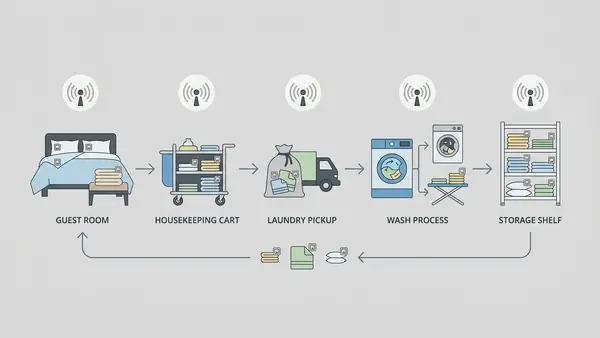
Manual linen tracking depends on people counting stacks, scanning barcodes one by one, or reconciling paper records after a problem appears. RFID changes the workflow because each textile carries a unique chip ID that can be read without direct line of sight. A compatible handheld or fixed reader can identify tagged items as they move through collection, laundry dispatch, washing, clean return, storage, and housekeeping issue.
In practical terms, the efficiency gain comes from more frequent and less disruptive data capture. Instead of waiting for a weekly stocktake, teams can verify a cart, bag, shelf, or laundry handoff at the point where the work already happens. This is why RFID is widely used for high-volume linen workflows where barcodes are too slow or too exposed to label damage.
RFIDEcho focuses on the tag side of this workflow: washable RFID laundry tags, chip selection, encoding, printing, and format customization that can work with compatible readers and laundry management software.
Where Efficiency Gains Come From
RFID does not improve laundry operations by magic. It improves them by reducing uncertainty at the points where hotels lose time, inventory, and accountability.
| Efficiency area | What RFID laundry tags help measure | Operational impact |
|---|---|---|
| Inventory accuracy | Item count by textile type, location, and status | Fewer manual audits and fewer surprise shortages |
| Linen loss | Last known scan point and movement history | Better accountability between hotel, floor, and laundry provider |
| Labor time | Bulk verification of carts, bags, or shelves | Less time counting and more time on room readiness |
| PAR stock planning | Real usage and available stock by item type | Less safety stock held only because counts are unreliable |
| Wash-cycle visibility | Number of wash or issue cycles per item | Better rotation, retirement, and replacement planning |
| Vendor reconciliation | Clean inbound and dirty outbound handoff records | Fewer billing or quantity disputes |
Some industry sources report large accuracy improvements after RFID adoption, but the exact result depends on tag quality, reader placement, workflow discipline, and software configuration. For a buyer, the safer way to evaluate ROI is to track baseline metrics first: current counting time, unexplained loss, linen shortage incidents, emergency purchases, and handoff disputes.
Match the Tag to the Textile
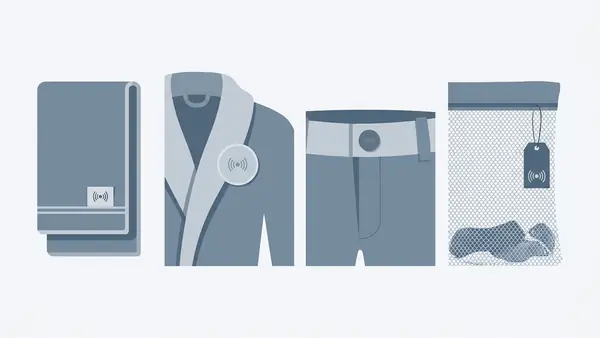
Tag format still matters to an operations result: a tag that suits a staff uniform may be too rigid for a pillowcase, and a soft bathrobe tag may not survive repeated banquet-linen pressing. The wrong format shows up later as failed reads, guest complaints, or tags that fall out mid-contract — all of which erase the efficiency gains below. Rather than repeat the full selection matrix here, this guide defers to the Custom RFID Laundry Care Labels buyer’s guide, which covers materials, wash durability, encoding, and attachment format by textile type in detail.
For product options, start with the main RFID laundry tags category, then compare specific formats such as washable textile RFID laundry tags, heat-resistant silicone RFID laundry tags, and PPS RFID laundry button tags.
Turning Scan Data into PAR Stock and Vendor Accountability
The counting-time savings are immediate, but the larger financial return in hospitality comes from two places manual systems handle poorly: PAR stock planning and outsourced-laundry reconciliation.
PAR stock and rotation. Most properties hold extra “safety” linen simply because their counts are unreliable — they buy more to avoid running short. When every item is scanned at issue and return, a property finally sees real circulating stock, real usage by item type, and real wash counts per item. That supports three decisions at once: trimming excess PAR that only exists to cover counting error, rotating stock evenly so no subset wears out first, and retiring items on actual wash-cycle life instead of a calendar guess. For a mid-size hotel, cutting one PAR level of oversupply across towels and sheets is often a larger saving than the labor reduction.
Vendor reconciliation. Properties that use an outsourced or central laundry lose money in billing disputes: dirty items sent out and clean items returned rarely match on paper, and without item-level data neither side can prove the gap. RFID reads at the dirty-out and clean-in handoff create a matching record both parties trust, so shortages are traced to a specific batch and date rather than argued after the fact. This alone often justifies a rollout for garment-rental and multi-property operators.
To build these models, the scan data has to be reliable across the full wash process, which depends on tag durability. This guide does not repeat the durability spec checklist — wash-cycle rating, temperature, chemical resistance, and post-wash read performance are all covered in the Custom RFID Laundry Care Labels buyer’s guide. RFID testing specialists also note that bending and inlay stress can reduce read range before a tag visibly fails; see Voyantic’s overview of RFID tag durability considerations, which is why pilots should test read performance after realistic wash cycles, not only physical appearance.
Implementation Checks Before Ordering Tags
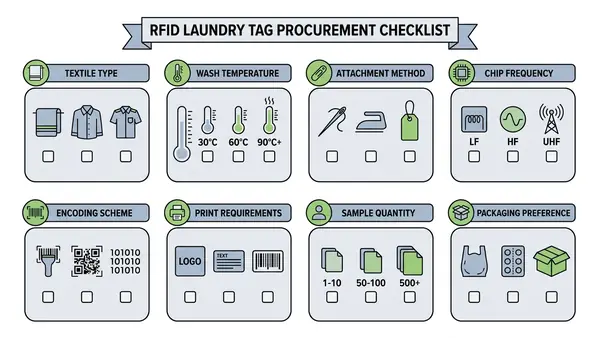
Before placing a bulk order, define how the tag will be used in the real hospitality workflow. A clear RFQ helps suppliers recommend the right format and prevents quotes based on assumptions.
Include these details:
- Textile types and quantities: towels, sheets, robes, uniforms, spa textiles, banquet linens, or laundry bags.
- Laundry process: wash temperature, dryer temperature, pressing exposure, detergent chemistry, and target wash-cycle life.
- Attachment method: sew-in, heat-press, button, pouch, hem, loop, or custom placement.
- RFID requirements: UHF or HF, chip model preference, EPC memory, user memory, and encoding rules.
- Read scenario: handheld scan, cart scan, conveyor, doorway, shelf, or laundry receiving point.
- Customization: logo, serial number, barcode, QR code, care symbols, color, numbering, and packaging by department.
- Pilot criteria: read accuracy in dry and wet stacks, read rate in carts, attachment survival, comfort check, and post-wash read performance.
General RFID buying guidance from Voyantic recommends sharing use case, functionality, format, durability, performance, printing, encoding, quality, delivery, and quantity details when requesting quotes. Atlas RFID Store’s RFID buyer questions also highlight read range, environmental conditions, attachment, read zones, and tag volume as early project inputs.
Common Mistakes That Reduce RFID Laundry Tag Performance
The most common mistake is choosing a tag only by price or claimed read range. Laundry environments punish weak encapsulation, poor antenna protection, and unsuitable placement.
Avoid these issues:
- Using a rigid tag on a guest-facing textile where comfort matters.
- Heat-pressing a tag onto fabric that cannot tolerate the required bonding temperature.
- Placing tags where they fold sharply, abrade, or press directly against the body.
- Assuming dry-stack read results will match wet, compressed, or mixed-textile carts.
- Ordering tags before confirming the EPC or UID format required by the intended software.
- Comparing supplier quotes without aligning wash-cycle rating, chip, encoding, printing, and packaging.
- Skipping sample wash tests before a full property rollout.
For attachment methods, sewn, heat-sealed, and pouch installations each have tradeoffs. Atlas RFID Store’s guide to RFID laundry tag attachment is a useful reference for understanding those options before specifying samples.
FAQ
Does RFID replace laundry management software?
No. RFID laundry tags identify each item. Compatible readers and management software collect and organize the scan data. RFIDEcho supplies and customizes the tags, including material, chip, encoding, printing, numbering, and packaging options.
How much linen loss can RFID realistically prevent?
There is no reliable universal figure — treat vendor-quoted percentages with caution. Baseline your own numbers first (unexplained loss, emergency purchases, handoff disputes), then measure the same metrics after a pilot. The gain comes from accountability at each scan point, not from the tag alone.
Do we need to re-tag the whole property at once, or can we phase it?
Most operators phase rollout by textile type or by property, starting with the highest-loss or highest-value category (often banquet linen or robes) to prove the ROI before scaling. A phased approach also lets housekeeping and the laundry vendor adjust scan routines gradually rather than all at once.
What should I send RFIDEcho for an RFID laundry tag RFQ?
Send textile types, quantity, wash and drying conditions, attachment preference, reader/software compatibility requirements, encoding format, printing needs, packaging preference, and sample test goals. If you are unsure, contact RFIDEcho with photos of the textile and a short workflow description.