01
Repeated washing stress
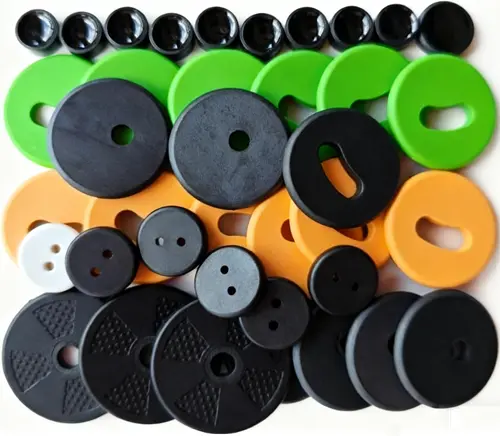
Laundry tags must resist water, detergent, heat, pressure, drying, and mechanical friction.

Use washable RFID laundry tags to identify hotel linen, hospital textiles, uniforms, and garments through washing, sorting, rental, and lifecycle tracking workflows.
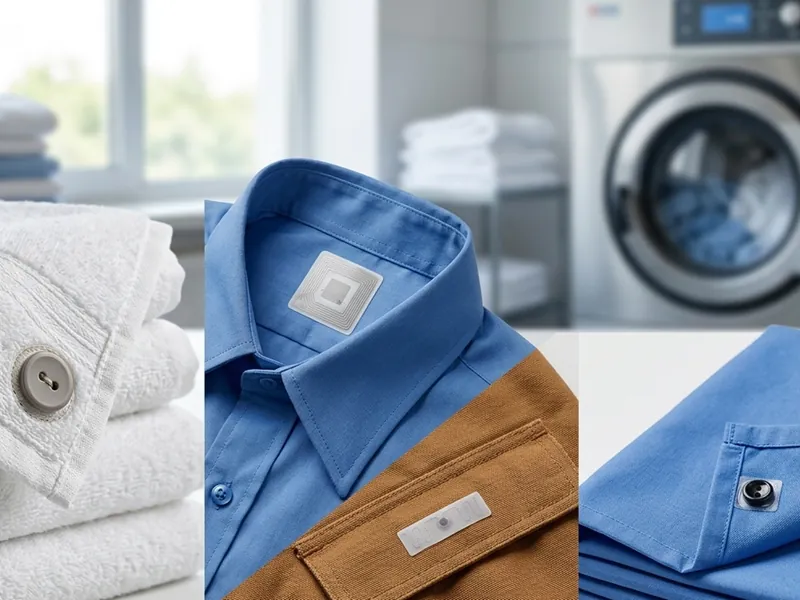
RFID laundry management depends on tags that survive heat, water, detergent, pressure, ironing, folding, and repeated wash cycles. Ordinary labels or fragile tags may fail in industrial laundry environments, so buyers need tag materials and attachment methods designed for textiles. RFIDEcho supplies RFID laundry tags for hotel linen, hospital textiles, uniforms, garments, workwear, and rental laundry operations. These tags can be sewn, heat-sealed, attached through buttons, or selected in PPS, silicone, textile, or other washable formats according to the application. When used with RFID readers and laundry management software, washable RFID tags help connect each item with wash count, sorting records, ownership, lifecycle, and loss-prevention data. The page focuses on tag durability, attachment method, frequency, encoding, and customization for laundry workflows.
Laundry tags must resist water, detergent, heat, pressure, drying, and mechanical friction.
Hotels, hospitals, and rental operators often spend too much time counting textiles by hand.
Linen and uniforms can be mixed between departments, customers, hospitals, rooms, or laundry batches.
Different textiles require sew-in, heat-seal, button, pouch, or special mounting methods.
The right tag depends on surface material, read distance, durability, mounting method, and required printed or encoded identification.
RFIDEcho provides the RFID tags. The tags can work with compatible RFID readers and management software as part of your existing workflow.
Sew, heat-seal, insert, or attach the washable RFID tag to linen, uniforms, garments, or textile items.
Encode each tag with item ID, EPC, customer code, linen type, or batch information.
Compatible RFID readers can identify tagged textiles during collection, washing, sorting, packing, or dispatch.
When used with management software, tag identity helps support wash count, ownership, and replacement decisions.
Identify sheets, towels, bathrobes, tablecloths, and other hospitality textiles through laundry cycles.
Tagging pointSupport identification of medical linen, patient garments, surgical textiles, and department-owned items.
Tagging pointTrack uniforms, factory clothing, rental garments, and employee-issued textiles.
Tagging pointUse RFID laundry tags to support sorting, batch verification, and packing workflows.
Tagging pointConnect RFID identity with lifecycle records to help plan replacement and reduce textile loss.
Tagging pointUse washable tags for clothing care, brand programs, and textile identification applications.
Tagging pointTell us your tagged object, material surface, reading workflow, environment, quantity, and printing or encoding requirements. We will help confirm a practical RFID tag configuration for your application.
RFID for Laundry & Uniform Rental: System Selection, Tag Attachment & What Drives Cost
Plan an RFID laundry system: HF vs UHF by volume, tag attachment methods that survive wash cycles, what actually drives laundry tag cost, and an RFQ checklist.
Read guide →Custom RFID Laundry Care Labels: Buyer’s Guide
Custom RFID laundry care labels guide covering materials, wash durability, encoding, printing, attachment, and RFQ details.
Read guide →How RFID Cuts Hotel Linen Loss and Laundry Labor
An operations guide for hotels and resorts: how RFID linen tracking reduces linen loss, cuts manual counting labor, sharpens PAR stock, and settles laundry vendor disputes.
Read guide →RFID laundry management is the use of washable RFID laundry tags — sewn, heat-sealed, or button-attached to linen, uniforms, and garments — so each item keeps a readable electronic ID through repeated industrial wash, dry, and press cycles, supporting wash-count and lifecycle tracking.
Hotel linen such as sheets and towels is usually tagged with sew-in or heat-sealed silicone tags in a hem or seam, while uniforms and workwear use snap-in clip tags on waistbands or button loops so the tag can be removed for repairs. Tell us the garment type.
Yes. Silicone RFID laundry tags are biocompatible and resist the thermal disinfection cycles (around 93°C for 10 minutes) and quaternary ammonium disinfectants used in hospital and healthcare laundry processes.
Each RFID laundry tag carries a unique encoded ID that is scanned at collection, washing, sorting, and dispatch, creating a record of which items pass through each stage so missing or misrouted linen can be traced back to a specific batch, department, or customer.
Yes, UHF laundry tags maintain read performance through damp fabric, with a slightly reduced range compared to dry conditions — sufficient for conveyor and tunnel readers used in active laundry processing lines.
Yes. Silicone laundry tags support permanent laser or pad printing of logos, care symbols, sequential IDs, and barcodes, and can be supplied in custom colours to identify different departments, hotels, or rental customers.
Yes. RFID garment rental tracking typically encodes each tag with a customer or account code alongside the item ID, so uniforms, workwear, and linen rented out to different businesses can be sorted, counted, and returned to the correct customer account during the wash cycle instead of relying on manual tagging.
Tell us your requirements and we'll reply within 1 business day.