
“Which RFID tag should I use?” doesn’t have one answer, because it’s really five separate questions stacked on top of each other: what frequency, what chip, what material, what it should cost, and who should supply it. Get one wrong and the other four don’t matter — a UHF tag with the perfect memory size still fails if it’s mounted on metal without anti-metal construction, and the best-specified tag in the world is a problem if the supplier that made it can’t hit a delivery date. This guide walks through all five in order, then routes you to a deeper page for whichever one your program needs most.
Before You Compare Tags: Is RFID the Right Technology?
Tag selection assumes RFID has already won the argument against barcodes, BLE, or computer vision — worth checking before you go further, especially if your team is fielding “why not just use barcodes” from finance or ops. RFID’s advantage is bulk, non-line-of-sight reads (scan a pallet without unpacking it); barcode’s advantage is near-zero per-unit cost and universal scanner support; BLE and vision-based tracking solve different problems again (continuous location vs. point-in-time identification). If that comparison hasn’t been made explicit yet, see the full RFID vs barcode vs BLE vs computer vision comparison before specifying a tag for a technology you haven’t fully committed to.
Step 1: Pick the Frequency Band
Frequency determines read range and read style more than any other single spec, and it’s usually the first fork in the road.
| Band | Typical range | Best fit |
|---|---|---|
| LF (125–134 kHz) | A few centimeters | Harsh environments with metal/liquid nearby where reliability matters more than range — animal ID, access control |
| HF/NFC (13.56 MHz) | Centimeters to ~1 meter | Deliberate one-at-a-time taps — item authentication, smartphone-readable tags, small pilot programs |
| UHF (860–960 MHz) | Up to several meters, bulk reads | Warehouse, retail, and asset programs that need to read dozens to hundreds of tags in one pass without line-of-sight |
The practical filter: if the workflow is “read one specific item on purpose,” LF or HF usually does the job for less. If the workflow is “read everything in this area at once,” UHF is the only band built for it. Most commercial/industrial deployments beyond a small pilot end up on UHF once volume is the bottleneck. For the deeper comparison — including what Gen2v2 vs. vendor “Gen2X” chip labels actually mean, and when active RFID beats passive — see HF vs UHF: which frequency for your application.
Step 2: Match Chip & Encoding to Your Data Requirements
Once the band is set, the chip decides what the tag can actually store and how it gets read back. UHF programs mostly use EPC Gen2 chips, but memory size and encoding scheme still vary by use case — a simple asset ID needs far less memory than a tag meant to carry a full product record or a GS1 Digital Link URI for consumer-facing scanning. If your program needs the tag to double as a data carrier — encoding a URL, a digital product passport, or a structured identifier rather than just a serial number — see RFID/NFC as a data carrier for digital product passports for how that changes the chip and encoding choice. Compliance also lives here: if your tags need to interoperate with NFC Forum-certified readers or you’re migrating an existing NFC product line, check NFC Forum CR15 certification migration before locking in a chip.
Step 3: Choose Material & Construction for Your Surface and Environment
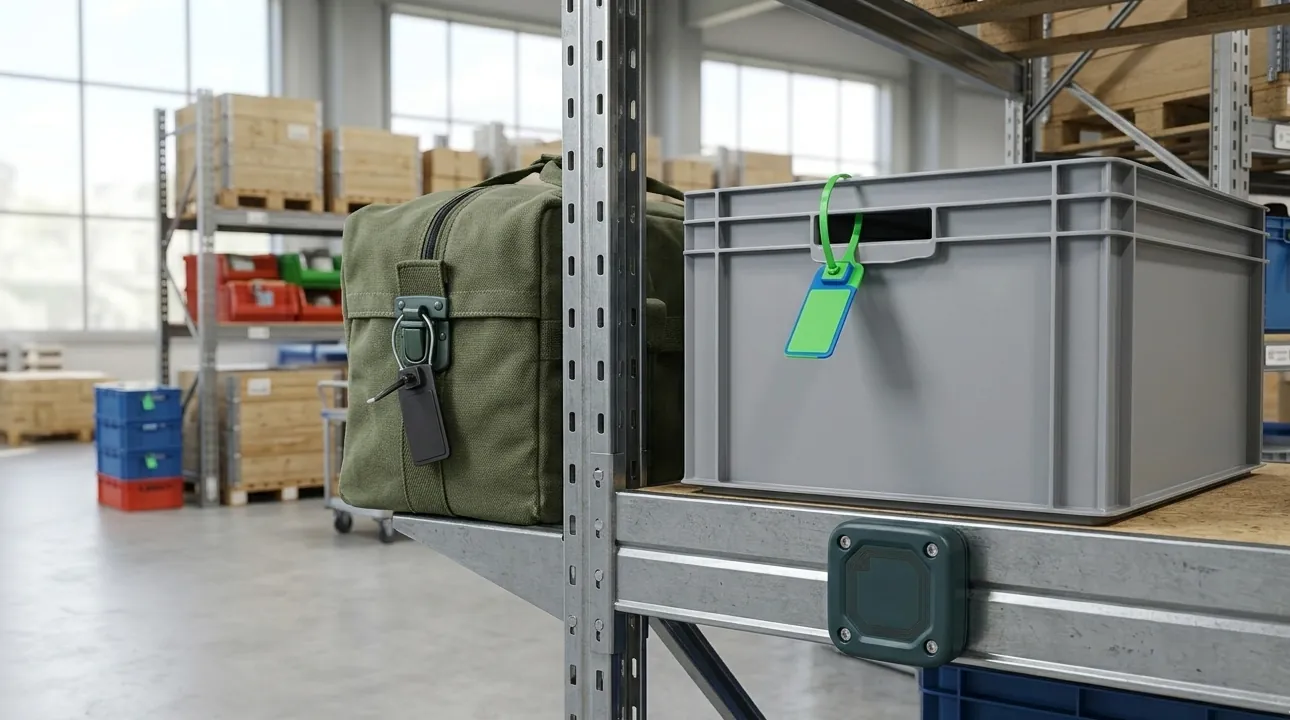
This is where specs quietly fail in the field. A tag rated for open-air mounting on cardboard will underperform or fail outright on metal, near liquid, or in high-heat environments — not because the chip is bad, but because the construction wasn’t matched to the surface. Ask three questions before ordering samples:
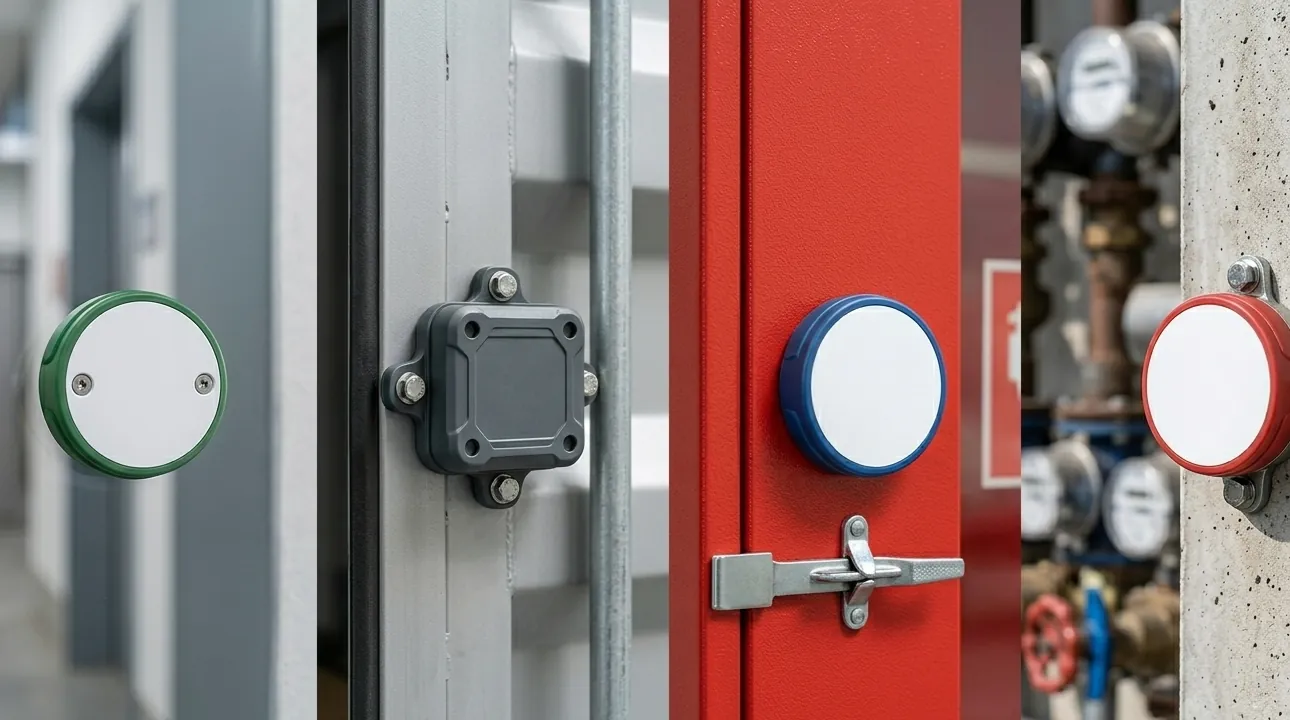
- What’s it mounted on? Metal and dense liquid both detune a standard tag’s antenna; either needs anti-metal or liquid-rated construction, not a stronger version of the same tag.
- What’s the operating environment? Outdoor UV/weather exposure, washdown chemicals, autoclave sterilization, and extreme temperature swings each call for a different encapsulation, not just a “rugged” label.
- How is it physically attached? Adhesive label, screw-mount, cable tie, or embedded — the attachment method has to survive the same conditions as the tag itself, or the tag becomes a loss-tracking problem instead of a solution.
For how to actually read a spec sheet’s encapsulation, temperature rating, and size trade-offs before ordering samples, see the RFID tag spec sheet decoder. For deep dives on surface-specific formats, the RFID tag catalog breaks out anti-metal, laundry-rated, and other construction classes by use case.
Step 4: Understand What Actually Drives Cost
RFID tags aren’t catalog-priced the way a barcode label is — construction, chip, and volume all move the number, and the same-looking tag can vary several times over in cost depending on what’s underneath the label. Frequency and chip choice set a floor; material and construction (Step 3) usually move the price more than either. For the full breakdown — what pushes a tag from cheapest tier to most expensive, and a framework for thinking about ROI at different volumes — see what actually drives the cost of RFID tags.
Step 5: Vet the Supplier Before You Commit to a Spec
A correctly specified tag from an unreliable supplier is still a failed program — late deliveries, wrong specs shipped, or no support once something goes wrong all show up after the spec sheet stops mattering. This step gets skipped more than any other because it feels like the “easy” part once the technical decision is made. It isn’t. See how to vet an RFID supplier before you order for the specific questions and red flags to check before committing to a vendor.
RFQ Checklist: What to Send for an Accurate Quote
Once you’ve worked through the five steps above, send this to get a comparable quote on the first pass:
- Frequency and read range needed (LF, HF/NFC, or UHF, and roughly how far the reader will be from the tag)
- Mounting surface and environment (metal, liquid-adjacent, outdoor, washdown, sterilization, or standard)
- Data requirement (simple serial/EPC, or structured data such as a digital product passport URI)
- Attachment method (adhesive, screw-mount, cable tie, sewn, embedded)
- Target volume (pilot quantity and expected annual volume — this is what determines pricing tier)
- Any compliance requirement (NFC Forum certification, industry-specific standards)
Contact RFIDEcho with these details, or browse the full custom RFID tag options to start narrowing the spec.
The Complete RFID Tag Selection Guide
This page is the starting point for choosing an RFID tag. Each guide below goes deeper on one step of the decision:
| Guide | What it covers |
|---|---|
| RFID vs barcode vs BLE vs computer vision | Whether RFID is the right technology before you specify a tag |
| HF vs UHF: which frequency for your application | Read range and read style, Gen2v2 vs “Gen2X” chip labels, and active vs passive |
| What actually drives the cost of RFID tags | Cost tiers, what pushes a tag up or down, and ROI framing |
| RFID tag spec sheet decoder | Reading encapsulation, temperature rating, and size trade-offs before ordering samples |
| How to vet an RFID supplier before you order | Lead-time, sampling, and after-sales red flags to check before committing |
| RFID/NFC as a data carrier for digital product passports | Choosing chip and encoding when the tag needs to carry structured data |
| NFC Forum CR15 certification migration | Compliance considerations when a chip/format needs to stay NFC Forum-certified |
For the full range of ready-made and customizable tags, see the RFID tag catalog or custom RFID tags.
FAQ
What’s the most important factor in choosing an RFID tag?
There’s no single most important factor — frequency, chip/encoding, material, cost, and supplier reliability all have to line up. In practice, mismatched material for the mounting surface (metal, liquid, extreme temperature) causes the most field failures among buyers who’ve already picked the right frequency.
Should I choose LF, HF, or UHF?
Choose based on read pattern, not range alone. LF and HF/NFC fit deliberate, one-at-a-time reads at close range. UHF fits bulk reads — dozens to hundreds of tags at once — which is what most warehouse, retail, and asset-tracking programs need beyond a small pilot.
How much does an RFID tag cost?
It depends on frequency, chip, material/construction, and order volume — there’s no fixed catalog price. Construction for harsh surfaces (metal, liquid, high heat) typically moves the price more than the frequency or chip choice does.
How do I know if an RFID supplier is reliable before ordering?
Ask about typical lead times and what happens when they slip, whether they provide samples before a bulk order, and what their after-sales support process looks like. Vague answers to any of these are a bigger risk indicator than the unit price.