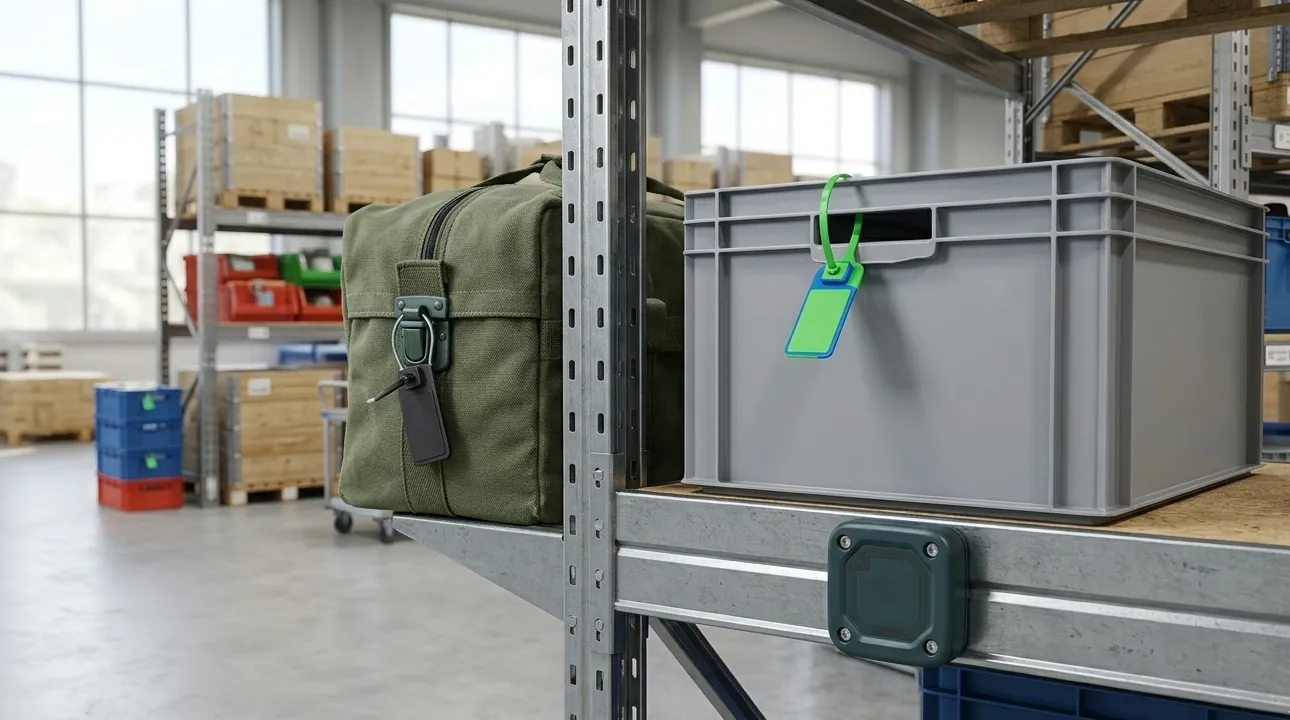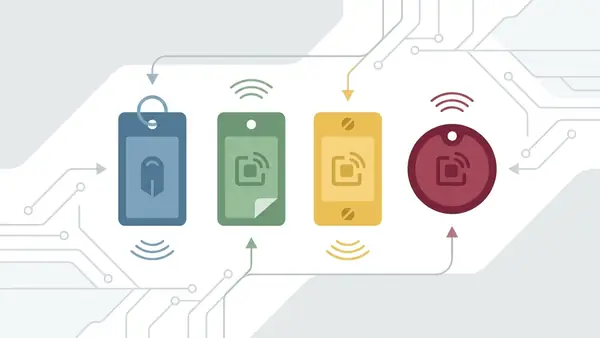

RFID security patrol tags are the fixed-location transponders that turn a guard’s route into a series of timestamped checkpoints. Picking the right tag comes down to four specs that most buyers skip until the pilot fails: frequency and chip, tag format and material, durability rating, and encoding. Get any of these wrong and a checkpoint either won’t read with your existing system or won’t survive its mounting location.
This guide walks through those four specs using RFIDEcho’s actual RFID patrol tags range — disc tokens, patrol point tags, and anti-metal variants — so you can specify the right tag for each checkpoint before placing an order. For how these tags fit into a complete guard tour deployment, see How RFID Guard Tour Systems Improve Accountability in Security Patrols.
What Is an RFID Security Patrol Tag?
An RFID security patrol tag is a small, fixed-location transponder — typically a 25-52mm ABS disc, button, or token — mounted at a checkpoint along a patrol route. It carries a unique, factory-encoded ID that a handheld reader, wand, or NFC-enabled smartphone captures during a round, creating the timestamped record a guard tour system uses to confirm the checkpoint was reached. The tag itself stores nothing about schedules or routes; it simply returns a fixed ID, so its job is purely to survive its mounting location and read cleanly every time.
Frequency and Chip: Matching the Tag to Your Reader
The most common ordering mistake is specifying a frequency without checking the chip model your existing reader expects. RFIDEcho’s patrol disc tags are available across all three RFID frequency bands, each with multiple chip options:
| Frequency | Protocol | Chip options | Typical reader |
|---|---|---|---|
| LF 125kHz | — | TK4100, EM4200, EM4305, T5577 | Dedicated patrol wand |
| HF 13.56MHz | ISO14443A | MIFARE Classic 1K/4K, NTAG213/215/216 | NFC-enabled smartphone or HF reader |
| HF 13.56MHz | ISO15693 | ICODE SLIX / SLIX2 | Long-range HF reader |
| UHF 860-960MHz | ISO18000-6C (EPC Gen2) | Alien H4, Monza R6, NXP UCODE 9 | Fixed or handheld UHF reader |
If your guard tour app runs on a smartphone, NTAG213/215/216 (HF, NFC Forum Type 2) is the safest default — every modern Android and iOS device reads it natively without an extra reader. If you’re replacing tags for an existing wand-based system, match the legacy chip — often TK4100 or EM4200 on LF — rather than upgrading the frequency, since the wand itself usually can’t be changed without a hardware refresh.
Tag Format and Material: Disc Tokens, Patrol Point Tags, and Anti-Metal Variants
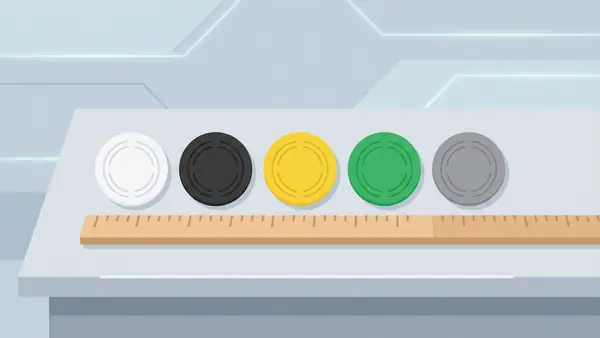
RFIDEcho’s patrol range covers three core formats:
| Format | Material & size | Mounting | Best for |
|---|---|---|---|
| RFID patrol token tag (no hole) | ABS disc, 30mm dia x 2.5mm, 5 color options | 3M adhesive | Indoor checkpoints, color-coded routes |
| NFC patrol point tag | ABS housing | Screw-through or double-sided tape | Walls, doors, equipment rooms |
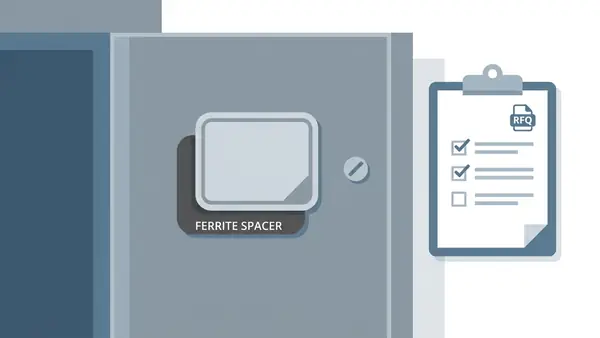
| RFID anti-metal patrol tag | ABS token with ferrite spacer, 25/30/52mm | Adhesive, epoxy-fill option for outdoor | Metal doors, cabinets, machinery |
Color matters more than buyers expect for patrol applications: the no-hole disc token is available in white, black, yellow, green, and grey, which lets a site color-code checkpoints by route or floor without relying on printed labels alone — useful when a guard is scanning quickly in low light.
Durability: IP Rating, Temperature Range, and Outdoor Protection
A patrol tag’s IP (Ingress Protection) rating determines whether it survives its mounting location, and most checkpoint failures trace back to using an indoor-rated tag outdoors rather than to the RFID chip itself.
- IP67 (standard): dust-tight and protected against temporary immersion — suitable for indoor corridors, stairwells, and covered equipment rooms.
- IP68 (outdoor/marine): continuous immersion protection — specify this for exterior poles, gates, and fence-line checkpoints exposed to rain and standing water.
- Epoxy fill (outdoor option): for anti-metal patrol tags mounted outdoors, an epoxy-filled housing adds a sealed layer over the ferrite spacer, protecting it from water ingress at exposed metal checkpoints such as gate hinges or outdoor electrical cabinets.
- Shock and anti-collision: the NFC patrol point tag’s ABS housing is rated waterproof and shock-proof, which matters at checkpoints where a guard’s wand or phone is likely to bump the tag during a quick scan.
Standard patrol tags carry a 2-year warranty. Confirm this covers your operating environment if checkpoints sit in direct sun or near washdown areas.
Quick Decision Path: Matching a Tag to Each Checkpoint
Walk your route and sort checkpoints into these four groups before requesting a quote:
- Indoor wall, door, or stairwell, non-metal — standard ABS disc token (no-hole), 3M adhesive, IP67, chip matched to your existing reader.
- Indoor wall, door, or cabinet, metal surface — anti-metal patrol tag with ferrite spacer, adhesive mount, IP67.
- Outdoor pole, fence, or gate, non-metal — disc token with bracket mount, IP68, UV-stable ABS color.
- Outdoor pole, fence, or gate, metal surface — anti-metal patrol tag with epoxy-fill option, IP68.
Most sites end up needing two or three of these four configurations rather than a single SKU. Plan the quantity split across groups before ordering rather than discovering the mismatch mid-rollout.
Common Mistakes When Buying RFID Security Patrol Tags
- Ordering “LF/HF/UHF” without picking one: patrol tag listings often show all three as options, but the quote, lead time, and reader compatibility all depend on the single chip you confirm.
- Skipping the anti-metal layer: a standard disc token mounted directly on a steel door loses most of its read range — request the anti-metal variant for any metal checkpoint up front.
- No outdoor protection on exterior tags: an IP67 indoor tag left on an uncovered pole will eventually fail at the seam; specify IP68 or the epoxy-fill option for exterior checkpoints.
- Mismatched encoding: factory-encoded IDs need to match your patrol system’s numbering scheme — by site, building, floor, or route. Send this mapping with your order, not after.
- No pilot batch: order 5-20 sample units across your actual checkpoint surfaces before committing to the full route quantity.
RFQ and Customization Checklist
| RFQ item | What to specify |
|---|---|
| Frequency & chip | LF (TK4100/EM4200/EM4305/T5577), HF ISO14443A (NTAG213/215/216, MIFARE Classic), HF ISO15693 (ICODE SLIX/SLIX2), or UHF (Alien H4, Monza R6, NXP UCODE 9) |
| Format & size | No-hole disc token (30mm), patrol point tag, or anti-metal token (25/30/52mm) |
| Color | White, black, yellow, green, or grey for route/floor coding |
| Mounting | 3M adhesive, screw or nail-through, or bracket clip for poles |
| Metal surface? | Anti-metal layer with ferrite spacer, yes/no |
| Outdoor exposure? | IP68 rating or epoxy fill, yes/no |
| Encoding | Site numbering scheme matching your patrol system |
| Marking | Logo printing, serial number, or laser UID marking |
| Quantity | Sample (5-20 pieces) vs. bulk (MOQ 500) |
For factory encoding, custom colors, or mixed anti-metal and standard tags across a single route, RFIDEcho’s custom RFID tag program covers chip selection, printing, and packaging for guard tour deployments of any size. If your patrol route also includes sealed cabinets, gates, or restricted facility access points, use RFID Access Control and Tamper-Evident Tags to decide when a one-time seal-tie tag is more appropriate than a reusable checkpoint tag.
FAQ
What is the difference between an RFID security patrol tag and a regular asset tag?
A patrol tag is optimized for fixed-checkpoint identification — it needs to return a consistent ID when scanned on a round, so durability and mounting matter most. An asset tag tracks a movable item, where read range and surface attachment matter more. RFIDEcho’s anti-metal disc tokens serve either role.
Which frequency should I choose for RFID security patrol tags?
Match your existing reader or guard tour app rather than picking by range. HF chips (NTAG213/215/216) work with any NFC smartphone and suit app-based systems; LF chips (TK4100, EM4200) suit legacy patrol wands; UHF chips (Alien H4, Monza R6, UCODE 9) fit fixed-reader setups.
Can RFID patrol tags be mounted on metal doors, cabinets, or machinery?
Yes, but only with an anti-metal variant. Standard disc tokens lose most of their read range on steel or aluminum because the metal detunes the antenna. RFIDEcho’s anti-metal patrol tags add a ferrite spacer layer that keeps normal read performance, with an epoxy-fill option outdoors.
What is the minimum order quantity for custom RFID security patrol tags?
MOQ is 500 pieces for standard configurations, with color and encoding customization included at that volume. Sample orders of 5-20 pieces are available within 3-5 business days for pilot testing across your checkpoint surfaces before committing to the full order.
Do RFID patrol tags come pre-encoded?
Yes. All patrol tags can be factory-encoded to your site’s numbering scheme — by building, floor, or route — before shipment. Provide the encoding format with your RFQ so checkpoint scans map directly to your patrol system’s location IDs without manual remapping.