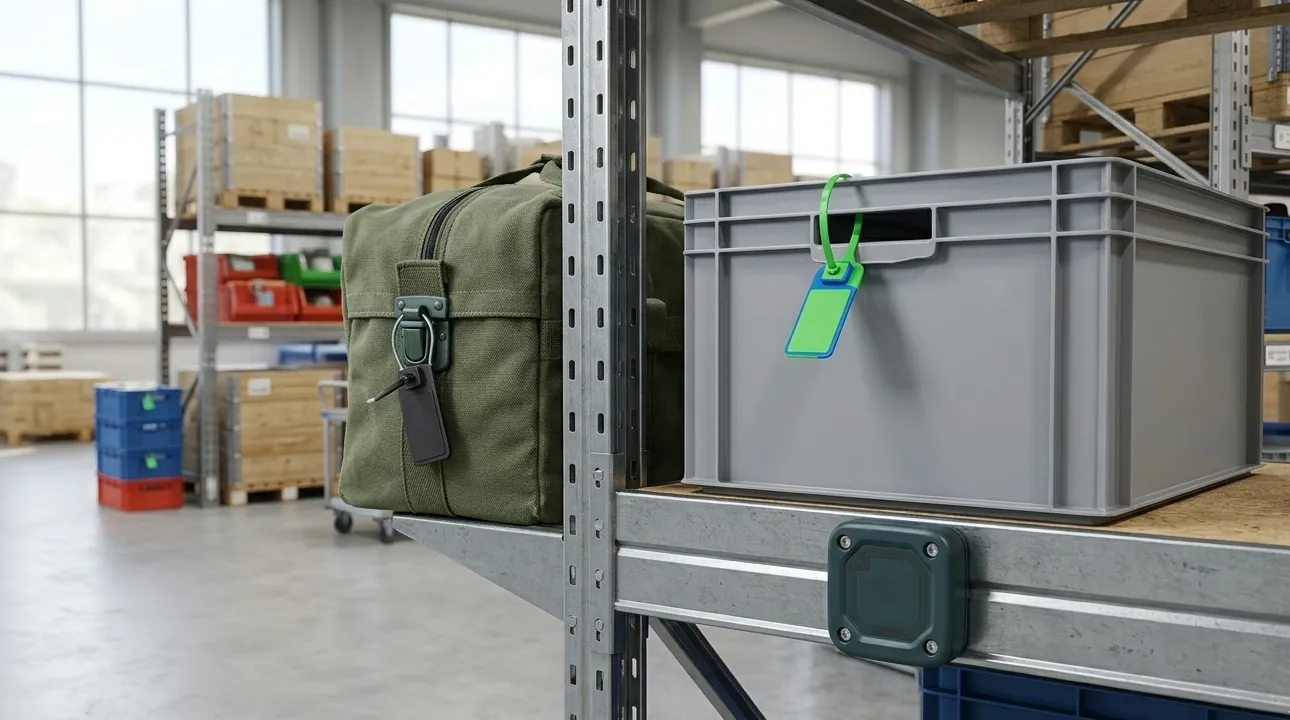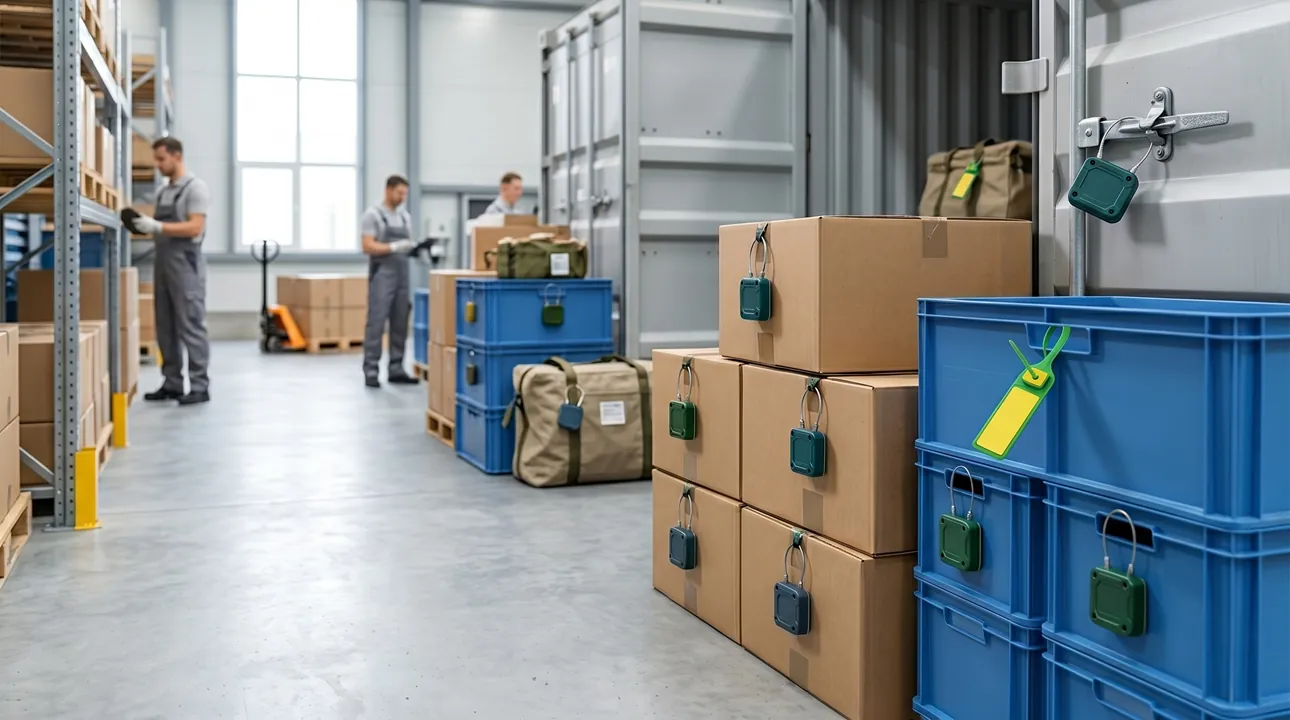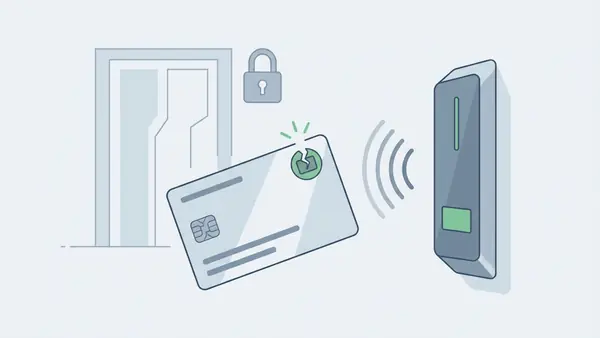

Tamper evident RFID tags add a physical audit layer to facility access control: they help show whether a door, cabinet, vehicle credential, inspection point, or restricted asset has been opened, removed, transferred, or bypassed. For facility managers and security integrators, the buying decision is not just “HF or UHF?” It is what evidence the tag must create when someone checks, opens, or tries to move it.
RFIDEcho supplies RFID tags and tag customization, so this guide focuses on tag selection. Compatible readers, access-control software, patrol apps, and alarm rules handle permissions and reports; the tag’s job is to carry the right ID, survive the location, and make tampering visible or detectable.
What Tamper-Evident RFID Adds to Facility Access Control
A standard access credential answers one question: “Which ID was presented?” A tamper-evident RFID tag adds another: “Does the physical item or access point still look sealed, fixed, or assigned to the right place?”
That distinction is important in facilities where access is not limited to main doors. Security teams may need to audit:
- Server room cabinets and network racks
- Utility meter boxes and electrical cabinets
- Fire equipment, emergency exits, roof hatches, and stairwell checkpoints
- Archive rooms, evidence lockers, chemical rooms, and controlled storage cages
- Parking gates, vehicle permits, and fleet access labels
- Guard tour checkpoints and maintenance inspection points
In RFID terms, tamper evidence can be physical, electronic, or both. A cable seal may leave visible pull traces and cannot be reused after opening. A destructible label may tear or leave a VOID pattern when removed. Some advanced tag designs can stop responding or return a changed status after the antenna loop is broken. AtlasRFIDStore’s explainer separates tamper-evident, tamper-resistant, and tamper-proof language, while HID’s tamper-evident RFID material describes both visual seals and electrical tamper detection for cabinets, maintenance, parking, and proof-of-presence workflows.
For most buyers, “tamper evident” is the safest practical specification. It does not promise that tampering is impossible. It means the tag or seal is designed so interference should be visible during inspection or detectable during scanning.
Facility Access Tamper-Evidence Matrix
Start with the facility point, not the tag catalog. A patrol checkpoint, a sealed cabinet, and a parking credential may all use RFID, but they create different audit evidence.
| Facility point | Best-fit tag format | Evidence created | Frequency fit | What to specify |
|---|---|---|---|---|
| Guard tour checkpoint, stairwell, fire point | Fixed RFID patrol tag | Proof that the checkpoint was physically scanned | LF, HF/NFC, or UHF matched to the reader | Mounting surface, chip, encoded checkpoint ID, indoor/outdoor rating |
| Cabinet, utility box, restricted cage, archive room | One-time RFID seal-tie tag | Visible evidence that the sealed point was opened | HF/NFC for close inspection; UHF for longer-range checks | Cable length, locking path, serial number, UID/EPC, color, read range |
| Parking permit, fleet windshield label, vehicle gate access | Tamper-evident windshield or vehicle label | Evidence that the tag was not moved to another vehicle | Usually UHF, sometimes HF/NFC | Adhesive type, windshield placement, vehicle ID encoding, read distance |
| Server rack, machine cover, tool case, sample box | Destructible label or seal tag | Evidence of removal, tear, or broken seal | HF/NFC for tap verification; UHF for inventory sweeps | Surface material, label size, printed serial, scan workflow |
| Metal cabinet, steel door, machinery checkpoint | Anti-metal RFID tag or compatible seal format | Reliable scan on conductive surfaces | Depends on reader; anti-metal construction matters | Metal surface details, spacer/ferrite requirement, pilot quantity |
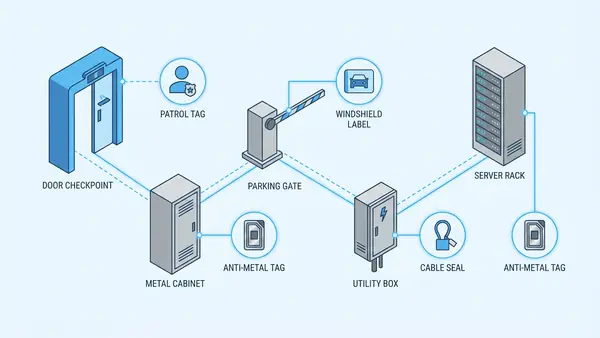
The matrix also helps avoid overbuying. If a guard only needs to prove presence at a stairwell, a fixed RFID patrol tag is usually more practical than a one-time seal. If a cabinet must remain closed between inspections, a reusable checkpoint tag is not enough; use a seal format that leaves evidence after opening.
Choosing Frequency and Read Range for Doors, Cabinets, and Gates
Frequency should follow the audit workflow.
HF/NFC 13.56 MHz is best when the scan should be close and intentional. A guard, technician, or inspector taps the tag with a phone, HF reader, or patrol device. RFIDEcho’s standard square RFID seal tag supports HF 13.56 MHz, ISO14443A, NTAG213 customized configuration, and a confirmed 0-5 cm read range. That short range is useful when the process requires deliberate inspection at the exact access point.
UHF 860-960 MHz is best when the facility needs longer-range identification. Examples include parking lanes, equipment yards, receiving areas, gates, or batch inspection of multiple sealed assets. RFIDEcho’s UHF RFID seal tags support ISO18000-6C, with confirmed read ranges of 0-4 m on the large logistics RFID seal tag and 0-5 m on the heavy-duty thick-wire RFID seal.
| Requirement | Better starting point | Why |
|---|---|---|
| Technician must tap a cabinet seal during inspection | HF/NFC | Close scan reduces accidental reads and confirms presence |
| Guard scans checkpoints with an existing patrol wand | Match the existing wand | Reader compatibility matters more than theoretical range |
| Parking gate or vehicle access label | UHF | Longer read distance suits lane or gate workflows |
| Sealed utility equipment checked from a short distance | UHF seal tag | Allows contactless verification without opening the enclosure |
| Smartphone-based inspection | HF/NFC | Phones can read NFC without a separate UHF reader |
Actual read performance depends on the reader, antenna, tag orientation, mounting surface, nearby metal or liquid, and local interference. For metal doors, cabinets, or machinery, specify an anti-metal construction or a compatible seal format instead of assuming a standard label will work. This same issue appears in patrol deployments, where RFID security patrol tags often need anti-metal variants for steel doors and cabinets.
When to Use RFID Seal-Tie Tags Instead of Patrol Checkpoint Tags
A patrol checkpoint tag proves that someone reached a location. An RFID seal-tie tag helps prove that something stayed closed until the seal was broken.
Use a seal-tie tag when the facility process includes one-time closure:
- Locking a utility cabinet after inspection
- Sealing a server rack or network cabinet during an audit period
- Closing an archive box, evidence bag, chemical cabinet, or tool cage
- Marking fire safety equipment or emergency assets after maintenance
- Confirming that a controlled enclosure was not opened between two checks
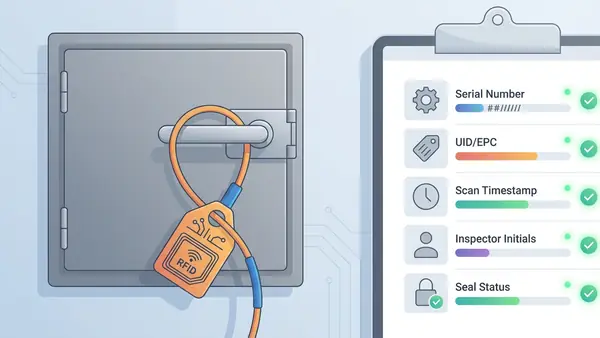
RFIDEcho’s RFID seal tie tags combine a physical cable seal with RFID identification. Product specifications include ABS + steel core construction, one-time locking, visible pull traces, unique serial numbers, and custom marking such as barcode, UID, EPC code, date, serial number, company logo, and company name. HF versions fit short-range tap inspection; UHF versions support longer-range verification where compatible UHF readers are already part of the workflow.
The one-time nature is the point. If the seal is opened, it should not be put back into service as if nothing happened. The replacement seal receives its own serial number and encoded ID, creating a cleaner chain of custody for the next inspection period.
Common Failure Points in Facility Tamper-Evident RFID Projects
Most failed pilots do not fail because RFID is unsuitable. They fail because the tag was specified without the real environment and audit process.
Watch for these mistakes:
- Using a reusable checkpoint where one-time evidence is needed. If the requirement is “prove this cabinet stayed closed,” choose a seal format, not only a fixed checkpoint tag.
- Choosing frequency before checking the reader. HF, LF, and UHF tags require compatible readers. Match the existing access-control, patrol, or inspection device first.
- Ignoring metal surfaces. Steel doors, cabinets, and equipment housings can detune standard tags. Test anti-metal formats or suitable seal placement.
- Relying on the tag alone for access permission. The RFID tag stores or returns an ID; access rules, user permissions, and exception reports belong in the compatible access-control or patrol software.
- No serialization plan. Printed serials, barcodes, UID/EPC values, and location IDs should map cleanly before tags are produced.
- No tamper test during sampling. A sample test should include normal scanning, removal/opening, replacement procedure, and the way staff record the exception.
External definitions can also cause confusion. “Tamper resistant” may mean harder to remove; “tamper proof” is often marketing shorthand; “tamper evident” means tampering should leave evidence. For procurement, write the required evidence in plain language: visible pull trace, destructible label, changed electronic status, unreadable damaged tag, or unique replacement seal record.
RFQ Checklist for Facility Access and Tamper-Evident Tags
A clear RFQ helps the tag supplier recommend the right form factor and avoid assumptions. Include these fields:
| RFQ detail | What to provide |
|---|---|
| Facility points | Door, cabinet, vehicle, gate, rack, utility box, patrol checkpoint, storage cage |
| Audit goal | Proof of presence, proof of closure, transfer prevention, removal evidence, inspection record |
| Existing reader or app | Patrol wand, NFC phone, HF reader, UHF handheld, gate reader, access-control platform |
| Frequency and protocol | HF 13.56 MHz ISO14443A, UHF ISO18000-6C, LF legacy format, or reader-specific requirement |
| Tag format | Patrol disc, anti-metal tag, cable seal, windshield label, destructible label, custom shape |
| Mounting or locking method | Adhesive, screw, bracket, steel core cable, cable length, locking path |
| Surface and exposure | Metal/non-metal, indoor/outdoor, rain, UV, washdown, dust, impact risk |
| Printed data | Serial number, barcode, UID, EPC, date, company name, logo, location code |
| Encoding data | Site, building, floor, room, cabinet, vehicle, route, checkpoint, or seal batch mapping |
| Color coding | Department, site, route, risk level, inspection cycle, or customer program |
| Sample test | Quantity, test locations, expected scan distance, tamper test procedure |
For mixed facilities, it is normal to order more than one tag type. For example, a site might use patrol tags for stairwell checkpoints, anti-metal tags for steel cabinets, HF seal-tie tags for close inspection, and UHF labels for parking access. RFIDEcho’s custom RFID tag program can align chip selection, printing, encoding, color, and packaging with that mixed deployment.
For guard-tour context, see How RFID Guard Tour Systems Improve Accountability in Security Patrols. That article explains how fixed checkpoint scans become timestamped patrol records, while this guide focuses on adding tamper evidence to facility access and sealed points.
FAQ
Are tamper evident RFID tags the same as access control cards?
No. An access control card identifies a user, vehicle, or item to a compatible access system. A tamper-evident RFID tag is designed to show or detect removal, opening, transfer, or interference. Many facilities use both: a credential for permission, a tamper-evident seal for audit evidence.
Should facility access tags use HF/NFC or UHF?
Use HF/NFC when the process needs a close, intentional tap with a phone or HF reader — cabinet inspection, maintenance verification. Use UHF when longer read distance is needed: vehicle gates, receiving areas, yards, batch checks. Match the tag to the reader and test on the real mounting surface.
Can RFID seal-tie tags be reused after inspection?
No, not when they are specified as one-time seals. RFIDEcho’s seal-tie tag data describes one-time locking structures with visible pull traces and non-reusable behavior. After opening, replace the seal with a new serialized tag so the audit record remains clear.
What information should be printed or encoded on facility security tags?
Common printed data includes serial number, barcode, date, company name, logo, and location code. Encoded data may include UID, EPC, site, building, room, cabinet, route, checkpoint, or vehicle mapping. Send the numbering file with the RFQ so printed and encoded identifiers match before production.