
RFID Clothing Care Tag for Garments
A garment-focused RFID tag option for B2B buyers evaluating apparel identification, textile tracking, and clothing care label integration projects.
- RFID tag format for garment identification projects
- Suitable for apparel and textile sourcing discussions
- Practical option for B2B garment tracking evaluation
- Quote-based support for bulk procurement requirements
- Specifications available after supplier confirmation
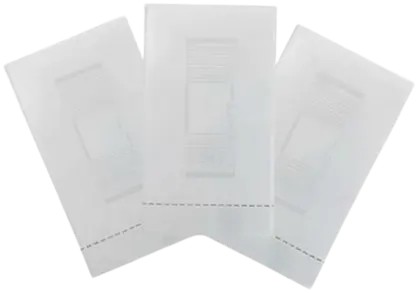
RFID Clothing Care Tag — Features
The RFID Clothing Care Tag for Garments is intended for buyers evaluating RFID-based identification solutions for apparel and textile products. It can be positioned for garment-related sourcing discussions where distributors, importers, factories, OEM/ODM buyers, and system integrators need to confirm tag structure, RFID performance, attachment method, durability, and customization requirements before ordering. Since key specifications require supplier confirmation, this page should guide buyers to request verified details such as frequency, chip type, size, material, washing performance, encoding options, MOQ, lead time, and packaging support.
Key Features
- Garment-focused RFID identification — positioned for apparel, textile, or clothing care label use in garment production, inventory control, textile circulation, and product traceability workflows, subject to confirmed specifications.
- Practical for B2B sourcing evaluation — supports distributors, importers, wholesalers, and procurement teams by encouraging direct specification confirmation before bulk orders.
- Application-oriented product discussion — relevant for apparel identification, garment inventory support, textile product tracking, uniform management, laundry-related workflows, and brand or factory-level traceability.
- Supplier confirmation before bulk ordering — buyers should confirm reader frequency, software workflow, attachment process, garment material, washing conditions, and compliance requirements before mass production or distribution.
RFID Clothing Care Tag — Customization
RFID Clothing Care Tag — Specifications
| Product Name | Washable RFID Clothing Care Tag |
|---|---|
| Category | RFID Retail Tags |
| SKU | RE-RTA09 |
| Material | Nylon, Polyester, Satin (Woven Fabric) |
| Installation Method | Sew-in |
| Printing | Full-Color Digital Printing, Thermal Transfer Printing |
| Customization | Size, Shape, Printing |
| Chip Type | Configurable with various UHF or HF/NFC chips |
| Frequency | UHF: 865–960 MHz | HF: 13,56 MHz |
| UHF Protocol | EPC Class 1 Gen2, ISO18000-6C |
| UHF Chip Options | Impinj Monza R6/M730, NXP UCODE 8/9 |
| UHF Read Range | Up to 8 m / 26 ft (depends on reader) |
| HF/NFC Protocol | ISO/IEC 14443A, NFC Forum Type 2 |
| HF/NFC Chip Options | NXP NTAG213, ICODE SLIX |
| HF/NFC Read Range | Up to 5 cm / 2 in (depends on reader) |
| Wash Cycles | Designed to withstand 50+ home laundry cycles |
| Heat Resistance | Tolerant to standard home drying and ironing temperatures |
| Operating Environment | Indoor, retail, and consumer use environments |
RFID Clothing Care Tag — FAQ
-
An RFID clothing care tag is used for garment-related identification and tracking projects. Typical buyer interests include apparel inventory, production tracking, textile management, uniform tracking, and garment traceability. Exact suitability depends on confirmed tag specifications.
-
The RFID frequency is not confirmed from the provided source. Buyers should ask the supplier to confirm whether the tag uses UHF, HF, NFC, or another RFID format.
-
Washing resistance is not confirmed from the provided information. Buyers should request verified washing test data, supported wash cycles, drying conditions, ironing tolerance, and recommended care conditions before bulk ordering.
-
The attachment method is not confirmed. Buyers should ask whether the tag can be sewn into care labels, embedded into garment labels, attached externally, or integrated during garment production.
-
Customization capability is not confirmed. Standard industry options may include logo printing, care instructions, serialization, barcode, QR code, chip selection, or encoding, but buyers must verify available options with the supplier.
-
Provide your garment type, target use case, RFID system requirements, required quantity, destination market, expected washing or handling conditions, and any customization needs. This helps the supplier confirm feasibility and pricing.
-
It may be relevant for garment inventory evaluation, but compatibility depends on the RFID frequency, protocol, chip, read range, and system setup. Buyers should confirm these details before use in retail or warehouse systems.
-
Sample availability is not confirmed. For RFID garment projects, buyers should request samples for reader compatibility, placement testing, washing tests, and garment integration checks before placing bulk orders.
Related Guides
- Buying Guides
NFC Garment Badge vs RFID Laundry Tag: Which One Fits Your Clothing Operation?
Compare NFC garment badges and RFID laundry tags on read range, scanning method, infrastructure cost, and durability to pick the right identification technology for your clothing or textile operation.
Read guide → - Buying Guides
How RFID Laundry Tags Survive 200 Wash Cycles
What a '200 wash cycle' RFID laundry tag rating actually tests, which construction survives longest, common failure points, and how to verify a supplier's durability claim.
Read guide → - Buying Guides
RFID Autoclave Tags: Buyer's Guide for Sterilization-Safe Tracking
RFID autoclave tags explained: what autoclave-rated actually means, key specs to verify, and how buyers select tags for reusable medical and hospitality textiles.
Read guide →