
328mm PP Serrated Grip RFID Tie Tag
PP zip tie tag with aggressive serrated teeth for secure grip on woven sacks and logistics bags. Supports both HF and UHF chips.
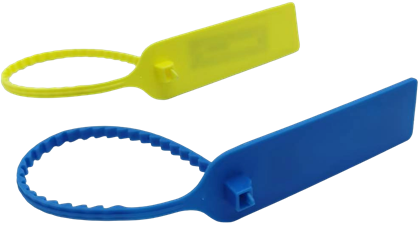
- Serrated 'big tooth' grip — mechanically interlocks with woven sack fibres, won't slip in transit
- 30 × 105 mm flag face — large enough for barcodes, QR codes, and printed text
- Supports UHF (U8, U9, H3, H9, R6A) and HF (NTAG213, F08) chips on the same platform
- Custom colour, silk-screen printing, laser engraving, and pre-encoding available from MOQ
328mm PP Serrated Grip — Features
Woven polypropylene sacks are the standard outer packaging for grain, feed, cement, and fertiliser — and they present a specific problem for standard cable tie fasteners. The open weave creates almost no surface friction for a smooth ratchet head; under sorting conveyor vibration, transit shaking, or simple bag re-stacking, conventional ties rotate and eventually slide off entirely. This tag was developed specifically for that environment. The tooth geometry is not cosmetic — it was designed around the typical fibre pitch and weave angle of agricultural and logistics-grade PP sack material, so the tag stays attached throughout the journey from packing line to final delivery.
Key Features
- Serrated 'big tooth' grip — mechanically interlocks with woven sack fibres, won't slip in transit
- 30 × 105 mm flag face — large enough for barcodes, QR codes, and printed text
- Supports UHF (U8, U9, H3, H9, R6A) and HF (NTAG213, F08) chips on the same platform
- Custom colour, silk-screen printing, laser engraving, and pre-encoding available from MOQ
328mm PP Serrated Grip — Customization
328mm PP Serrated Grip — Specifications
| Total Length | 328 mm |
|---|---|
| Flag Size | 30 × 105 mm |
| Material | Polypropylene (PP) |
| UHF Chips | NXP U8, U9, Impinj H3, H9, R6A |
| HF Chips | NTAG213, MIFARE Classic F08 |
| Frequency | 860–960 MHz (UHF) / 13.56 MHz (HF) |
| Protocol | ISO 18000-6C / ISO 14443A |
| Operating Temp | -25 °C to +65 °C |
| Storage Temp | -30 °C to +70 °C |
| Colour Options | Green, Yellow, Blue |
| Customization | Silk-screen, laser, encoding, encryption |
| MOQ | 1,000 pcs |
328mm PP Serrated Grip — FAQ
-
Standard zip tie notches are designed for smooth surfaces. Woven polypropylene sacks have a loose, fibrous weave that lets standard notches slide under load. The serrated 'big tooth' profile uses wider, angled teeth that interlock with the bag fibres, holding grip even when the bag is shaken or stacked.
-
Yes, mixed-chip batches are available from 2,000 pcs total, split into two chip types with a minimum of 500 pcs per chip variant.
-
No. The PP locking mechanism is single-use by design — once tightened, the tie cannot be released without cutting, which is a deliberate tamper-evidence feature for logistics security.
-
Green, yellow, and blue are standard stock colours. Custom colours (including pantone matches) are available from a higher MOQ — typically 3,000 pcs per colour. Custom colours are useful for visual category coding when multiple product lines or lot dates are handled in the same facility.
-
The serrated design is optimised for woven or fibrous surfaces, where it gives the most grip advantage. On smooth surfaces (polyethylene, paper, cardboard) a standard-notch zip tie may perform equally well at lower cost. For mixed packaging, we recommend the serrated variant throughout for consistency.
-
The 30 × 105 mm flag face supports silk-screen printing (logo, fixed text, sequential numbers) and laser engraving (variable serial numbers, barcodes, QR codes). Silk-screen is more cost-effective for large fixed-content runs; laser is preferred when each tag requires a unique identifier.
Related Guides
- Technology Basics
RFID Tracking Tags vs Asset Tags: What's the Difference?
Compare RFID tracking tags and RFID asset tags with use-case tables, tag format mapping, a decision checklist, and RFQ guidance for asset tracking projects.
Read guide → - Buying Guides
NFC Labels for Trailer Axles: Selection Guide
Choose NFC labels for trailer axles with practical guidance on on-metal tags, chip selection, placement, encoding, and RFQ testing.
Read guide → - Buying Guides
How Much Do RFID Tags Cost? What Drives the Price
What sets RFID tag cost: construction tier, chip, material, encoding, and volume — plus reader and software costs, break-even volume, and how to get an accurate quote.
Read guide →