
Flexible FPC Anti-Metal RFID Tag
Micro-size flexible FPC RFID tags with optional ferrite anti-metal shielding, HF/NFC and UHF options, and custom sizing for compact asset tracking and embedded industrial applications.
- Micro sizes for tight installation spaces
- Flexible PI substrate with etched copper antenna
- HF/NFC and UHF versions available
- Optional ferrite layer for metal surfaces
- Custom chip, size, adhesive, and encoding support
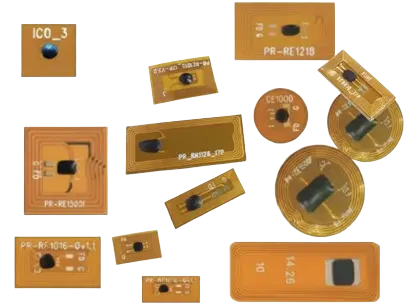
Flexible FPC Anti-Metal RFID — Features
Flexible FPC Anti-Metal RFID Tags are designed for projects where standard RFID tags are too large, rigid, or difficult to install. Built on a flexible printed circuit structure with a polyimide base and etched copper antenna, these tags provide a thin and lightweight form factor for compact products, curved surfaces, embedded components, and industrial assets. The supplier page confirms HF/NFC 13.56 MHz and UHF 860–960 MHz versions, optional ferrite shielding for metal surfaces, optional adhesive backing, and operating temperature from -30°C to +280°C. This makes the product suitable for B2B buyers seeking customized RFID tags for metal or non-metal asset identification.
Key Features
- FPC flexible printed circuit technology with a polyimide base and etched copper antenna supports a thin, lightweight, and bendable form factor.
- Optional ferrite layer is confirmed for reliable performance on metal or non-metal surfaces, helping buyers configure the tag for metal equipment, embedded components, or compact industrial assets.
- HF/NFC 13.56 MHz and UHF 860–960 MHz versions allow procurement teams and system integrators to match authentication, asset tracking, inventory, or reader-system requirements.
- Operating temperature from -30°C to +280°C, with customization support for chip types, sizes, programming, materials, adhesive backing, ferrite layer, logo epoxy, and chip encoding.
Flexible FPC Anti-Metal RFID — Customization
Flexible FPC Anti-Metal RFID — Specifications
| Product Type | Flexible FPC Anti-Metal RFID Tag |
|---|---|
| Material | FPC (Flexible Printed Circuit), PI (Polyimide) |
| Antenna | Etched Copper |
| Available Sizes (HF/NFC) | Dia 8 mm, Dia 10 mm, Dia 12 mm, 9 × 19 mm, 12 × 12 mm, 15 × 15 mm, 6 × 16 mm, 8 × 12 mm, 8 × 18 mm, 15 × 25 mm |
| Available Sizes (UHF) | 25 × 25 mm, 49 × 9 mm, 70 × 9.5 mm |
| Standard Inlay Thickness | ~0.15 mm, customizable |
| Frequency | 13.56 MHz (HF/NFC), 860–960 MHz (UHF) |
| Protocol | ISO14443A, ISO15693, ISO18000-6C |
| HF/NFC Chip Options | NXP NTAG 213, NXP ICODE SLIX, MIFARE Ultralight EV1, MIFARE 1k EV1, MIFARE DESFire |
| UHF Chip Options | Impinj M730/M750, Monza R6/R6-P, Alien Higgs-3 |
| Operating Temperature | -30°C to +280°C |
| Adhesive | Optional adhesive backing |
| Anti-Metal Layer | Optional ferrite layer |
| Crafts | Logo Epoxy, Chip Encoding |
| Custom Size Examples | 9 × 19 mm, 12 × 12 mm, 15 × 25 mm, 70 × 9.5 mm, or customized |
| Custom Inlay Thickness | 0.15 ± 0.01 mm or customized |
Flexible FPC Anti-Metal RFID — FAQ
-
FPC stands for Flexible Printed Circuit. This tag uses a copper-etched antenna on a flexible polyimide base, creating a thin and bendable RFID tag format.
-
Yes. The supplier page confirms that an optional ferrite shielding layer can be added for reliable performance on metal or non-metal surfaces.
-
The supplier page lists HF/NFC 13.56 MHz and UHF 860–960 MHz versions.
-
Confirmed HF/NFC sizes: Dia 8, 10, and 12 mm, plus 9 × 19, 12 × 12, 15 × 15, 6 × 16, 8 × 12, 8 × 18, and 15 × 25 mm. Confirmed UHF sizes: 25 × 25, 49 × 9, and 70 × 9.5 mm.
-
The supplier page states an operating temperature range from -30°C to +280°C.
-
Confirmed options include chip selection, size customization, custom programming, material customization, adhesive backing, ferrite anti-metal layer, logo epoxy, and chip encoding.
-
Yes. Optional adhesive backing is confirmed for peel-and-stick installation.
-
Yes. The supplier page states that samples can be provided for testing. Buyers should share the application surface, reader setup, and project requirements before sampling.
Related Guides
- Buying Guides
Why Metal Asset Tracking Needs On-Metal RFID Tags
Learn why metal asset tracking requires on-metal RFID tags, how metal affects read range, and how to choose the right tag.
Read guide → - Industry Applications
RFID Tags for Tools & Equipment: Buying Guide & Format Comparison
A buying guide to RFID tags for tools and equipment: compare anti-metal formats, follow a workflow decision tree, and use an RFQ checklist before ordering samples.
Read guide → - Buying Guides
How Much Do RFID Tags Cost? What Drives the Price
What sets RFID tag cost: construction tier, chip, material, encoding, and volume — plus reader and software costs, break-even volume, and how to get an accurate quote.
Read guide →