
ABS RFID Cable Tie with Release Lever
Reusable ABS + Nylon 66 RFID cable tie with side-press release lever. Unlocks without tools for easy cycling. Supports both UHF and HF chips.
- Side-press release lever: deliberate, intentional unlocking without tools — not accidental
- Nylon 66 strap relocks automatically after release — fully reusable over the asset lifecycle
- Dual-frequency support: UHF 915 MHz and HF 13.56 MHz on the same physical platform
- Custom chip, colour, surface marking (laser/silk-screen), and EPC/NDEF encoding per order
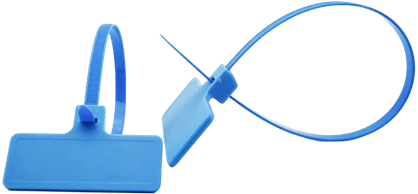
ABS RFID Cable Tie — Features
A split-nylon tie opens whenever someone pulls the two strap ends apart — a perfectly valid design for cycling inventory, but a problem when a release event should be logged or controlled. This tag introduces a physical step into the process: the lever must be actively pressed before the strap will move. That extra action is small enough to be performed in seconds, but significant enough that it does not happen by accident and leaves a clear answer to the question of whether a tag was removed. It also supports environments where both UHF and NFC infrastructure coexist in the same facility — maintenance technicians scanning with smartphones and fixed UHF readers at dock doors can both read from the same tag population.
Key Features
- Side-press release lever: deliberate, intentional unlocking without tools — not accidental
- Nylon 66 strap relocks automatically after release — fully reusable over the asset lifecycle
- Dual-frequency support: UHF 915 MHz and HF 13.56 MHz on the same physical platform
- Custom chip, colour, surface marking (laser/silk-screen), and EPC/NDEF encoding per order
ABS RFID Cable Tie — Customization
ABS RFID Cable Tie — Specifications
| Head Size | 31 × 72 × 28 mm |
|---|---|
| Strap Length | 282 mm (customizable) |
| Material | ABS head + Nylon 66 strap |
| Release Mechanism | Side-press lever (tool-free, reusable) |
| UHF Chips | Impinj H9, NXP U8, U9, M4, M5 |
| HF Chips | FM1108, NXP S50, Ultralight, Ultralight-C, ICODE SLI-X, NTAG213/215/216 |
| UHF Frequency | 915 MHz |
| HF Frequency | 13.56 MHz |
| UHF Read Range | 0–5 m |
| HF Read Range | 0–5 cm |
| Protocol | ISO 18000-6C / ISO 14443A / ISO 15693 |
| Unit Weight | 11.2 g |
| Operating Temp | -10 °C to +65 °C |
| Storage Temp | -10 °C to +75 °C |
| Packaging | 50 pcs / bag, 1,000 pcs / box (12 kg/box) |
| Data Retention | 10 years; 100,000 write cycles |
| MOQ | 500 pcs |
ABS RFID Cable Tie — FAQ
-
The split nylon tie separates the strap at the head, ideal for opening cable looms flat. The release lever tie keeps the strap intact — pressing the lever disengages the ratchet so the strap slides out. Better for single-cable or equipment-handle use where you want a deliberate, auditable unlock.
-
Yes. The Nylon 66 strap is electrically non-conductive and rated for sustained contact with cable insulation. It is widely used for tagging electrical panels, switchgear, and network distribution equipment. Confirm operating temperature requirements against your specific environment.
-
The standard strap is 282 mm. Custom lengths are available — specify the total strap length needed when placing your order, with a minimum of 500 pcs per custom length variant.
-
HF options include MIFARE Classic (FM1108, NXP S50), MIFARE Ultralight / Ultralight-C for cost-sensitive NFC, ICODE SLI-X for ISO 15693 library and supply chain systems, and NTAG213/215/216 for NFC smartphone scanning. Share your reader platform and we will confirm the chip.
-
The ABS lever mechanism is rated for a minimum of several hundred open/close cycles under normal conditions, and the Nylon 66 strap resists fatigue well beyond that count. For daily re-tagging, contact us for fatigue test data on your intended strap width.
Related Guides
- Technology Basics
RFID Tracking Tags vs Asset Tags: What's the Difference?
Compare RFID tracking tags and RFID asset tags with use-case tables, tag format mapping, a decision checklist, and RFQ guidance for asset tracking projects.
Read guide → - Buying Guides
NFC Labels for Trailer Axles: Selection Guide
Choose NFC labels for trailer axles with practical guidance on on-metal tags, chip selection, placement, encoding, and RFQ testing.
Read guide → - Buying Guides
How Much Do RFID Tags Cost? What Drives the Price
What sets RFID tag cost: construction tier, chip, material, encoding, and volume — plus reader and software costs, break-even volume, and how to get an accurate quote.
Read guide →