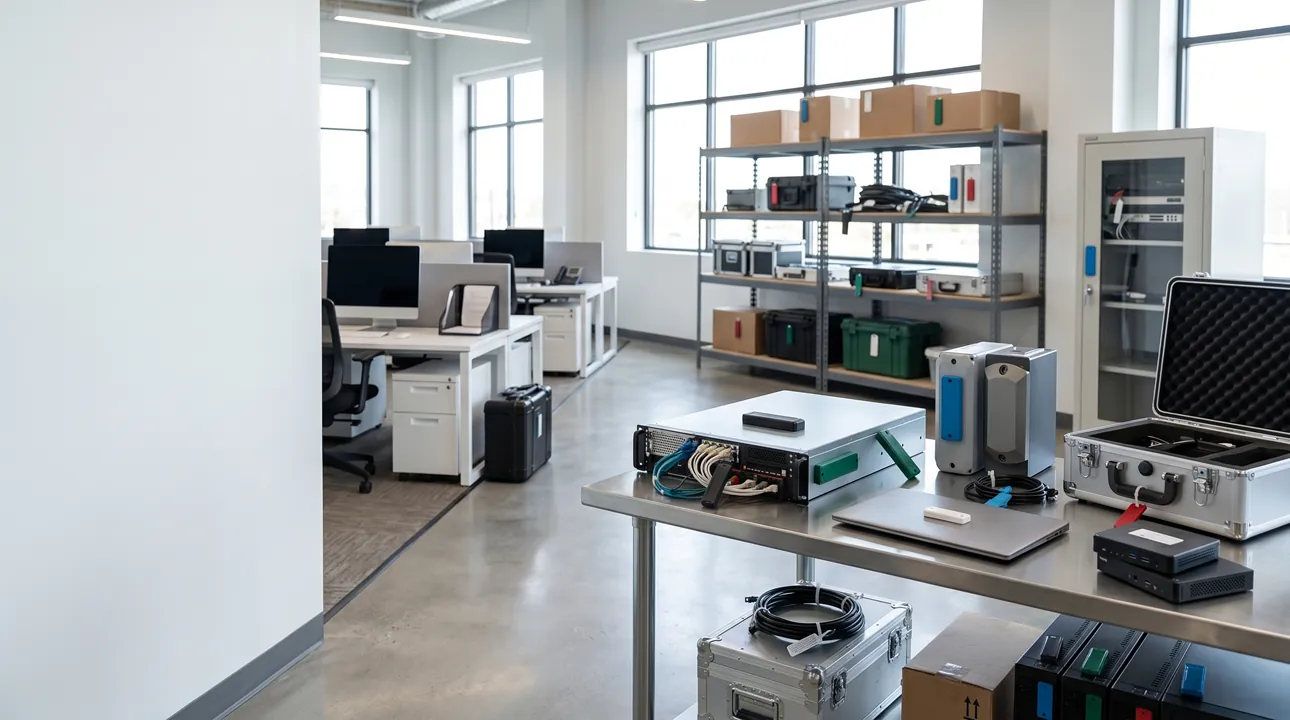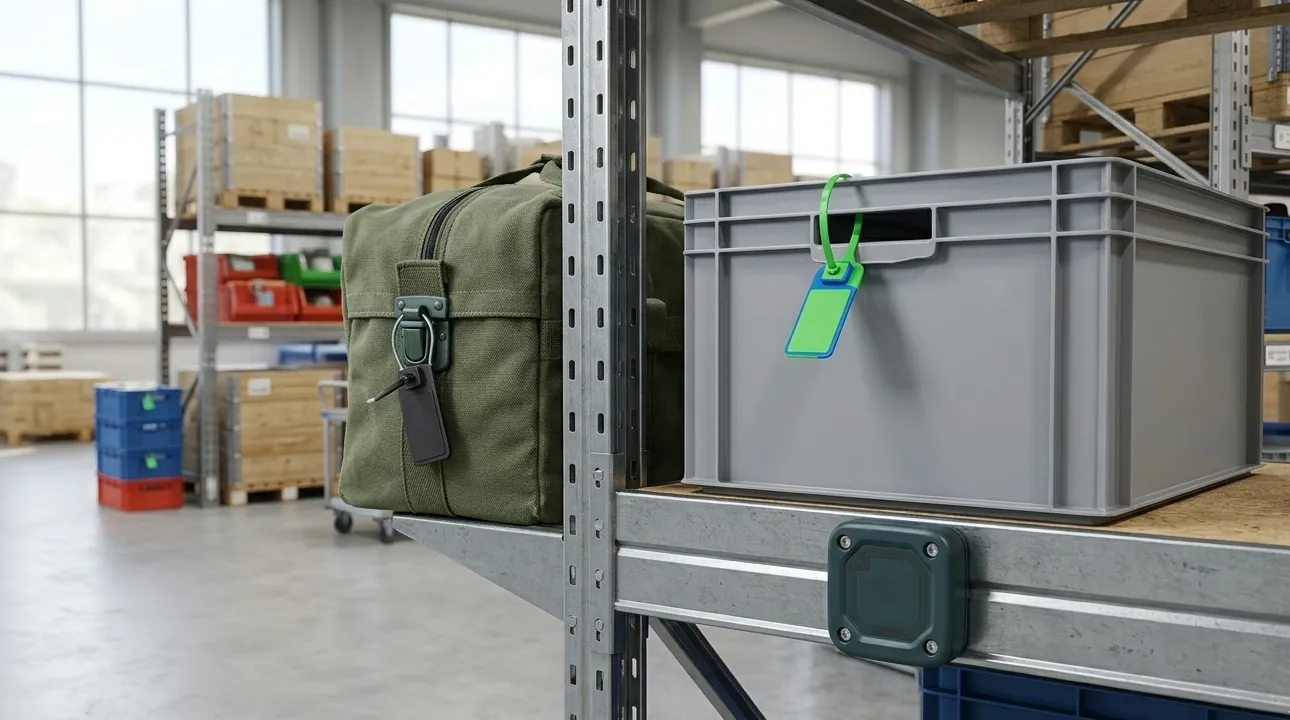
Custom RFID laundry care labels help buyers identify garments, linens, uniforms, and textile assets through repeated washing and handling. The right label is not only an RFID chip sewn into fabric; it is a matched choice of tag format, material, frequency, encoding, print content, attachment method, and wash durability.
What Are Custom RFID Laundry Care Labels?
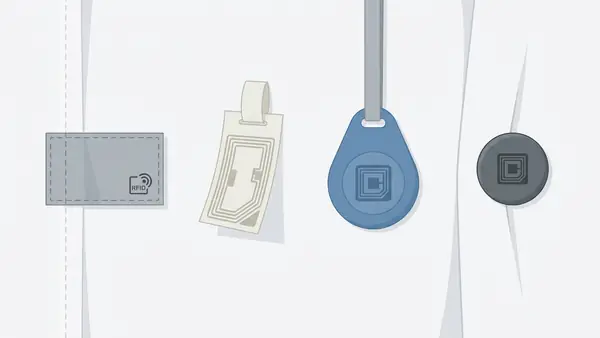
A custom RFID laundry care label is a washable RFID identifier designed for textile or garment use. It may look like a normal sewn care label, a woven clothing label, a soft textile tag, a silicone laundry tag, or a PPS button tag, depending on the application.
The term is used loosely, so buyers should separate three related products:
| Product type | Best fit | Main selection concern |
|---|---|---|
| RFID care label | Apparel, uniforms, branded garments, retail clothing | Softness, sewing position, print content, wearer comfort |
| Textile RFID laundry tag | Linen, towels, gowns, workwear, rental garments | Wash cycles, flexibility, sewing or heat-seal method |
| Rugged laundry tag | Harsh industrial laundry, high heat, pressure, sterilization | Encapsulation, temperature, chemicals, pressure, lifespan |
A disposable retail RFID sticker or hang tag is usually not enough for laundry use. Laundry care labels must keep their RFID performance after washing, drying, folding, bending, rubbing, and sometimes ironing or sterilization. If the label also carries printed care instructions, barcode backup, QR code, or a logo, the print must remain legible enough for the intended workflow.
For broader product options, buyers can compare RFID laundry tags before narrowing the specification.
Where RFID Laundry Care Labels Are Used
RFID laundry care labels are most useful when many similar textile items move through repeated issue, use, collection, washing, sorting, and return cycles. Manual counting and barcode scanning can work at low volume, but they become slow when items are bundled, folded, hidden in carts, or visually identical.
Common applications include:
- Hotel towels, bedsheets, pillowcases, robes, and table linen.
- Hospital linen, gowns, scrubs, towels, and protective garments.
- Uniform rental and workwear programs.
- Commercial laundry and textile rental services.
- Dry cleaning and garment lifecycle tracking.
- Gym, spa, restaurant, and cruise textile management.
- Apparel production, retail inventory, returns, and authentication.
In hospitality, RFID labels help track linen movement, wash count, loss, and replacement timing. In healthcare, they can support item-level traceability for linen and garments that must be cleaned, returned, and available on time. In uniform rental, each garment can be associated with a customer, employee, department, wash count, or repair status.
RFID labels are only one part of the workflow. They must be selected to work with compatible RFID readers and laundry management software used by the buyer, integrator, or laundry operator. For application context, see RFIDEcho’s RFID laundry management solution page.
Key Specifications: Frequency, Chip, Memory, and Standards
Most custom RFID laundry care labels for bulk textile tracking use passive UHF RFID. UHF is common because it supports longer read distances and multi-tag reading, which helps when scanning carts, stacks, bags, conveyor points, or laundry batches. HF or NFC may be useful for close-range reading, phone interaction, or special authentication use cases, but it is usually not the first choice for high-volume laundry counting.
For UHF projects, define these fields before ordering samples:
| Specification | What to decide |
|---|---|
| Frequency | UHF 860–960 MHz region, HF 13.56 MHz, NFC, or another requirement |
| Protocol | EPC Gen2 / ISO 18000-6C for common UHF laundry workflows |
| Chip | UCODE, Monza, Impinj, M730-class, or customer-specified chip |
| EPC memory | Identifier length and encoding structure |
| TID | Whether the manufacturer-assigned ID should be read or recorded |
| User memory | Only request it if extra on-tag data is truly needed |
| Encoding | EPC, GS1 SGTIN-96, customer serial number, batch, or asset ID |
| Security | Access password, lock settings, kill password if required |
| Printed match | Whether barcode, QR code, or human-readable serial must match EPC |
The GS1 RFID standards are useful when encoded data must interoperate across trading partners. GS1 also publishes the EPC Tag Data Standard, which defines EPC structures used in Gen2 RFID tags. For closed-loop laundry operations, a customer-defined serialized EPC may be enough, but it still needs a controlled numbering plan to avoid duplicate IDs.
Wash Durability and Material Selection
“Washable” is not a complete requirement. A label that survives home laundry may fail in industrial washing if it cannot handle heat, pressure, chemicals, drying, ironing, bending, or repeated extraction.
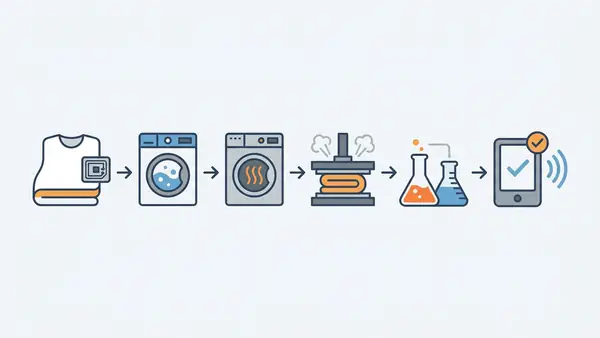
Define the real operating stress:
- Target wash cycles, such as 100, 150, 200, or more.
- Washing temperature and detergent chemistry.
- Drying temperature and time.
- Ironing, tunnel finishing, or heat pressing exposure.
- Extraction pressure, squeezing, twisting, and bending.
- Bleach, disinfectant, alkali, acid, or solvent exposure.
- Autoclave or sterilization needs for medical textiles.
- Comfort requirements if the label touches skin.
Material choice should follow that environment:
| Material or format | Strength | Watch point |
|---|---|---|
| Woven or satin care label | Soft, brand-friendly, garment-like | Not for every harsh industrial process |
| Textile laundry tag | Flexible, sewable, suitable for linens and garments | Must verify wash and press conditions |
| Silicone tag | Flexible, waterproof, heat and chemical resistant | May be thicker than a care label |
| PPS button tag | Rugged, high-temperature, durable | More rigid and less discreet |
| TPE laundry tag | Durable, flexible, often heat-seal friendly | Confirm adhesive and press settings |
For RFIDEcho product examples, compare washable textile RFID laundry tags and heat-resistant silicone RFID laundry tags.
Attachment and Placement Options
The attachment method affects both durability and read reliability. A strong RFID tag can still fail if it is sewn through the chip area, placed where garments fold sharply, or heat-sealed with the wrong temperature and pressure.
Common attachment options include:
- Sewing into a seam, hem, collar, waistband, or care-label stack. This is common for garments and uniforms. Avoid stitching through the RFID chip or antenna area.
- Heat sealing to flat textiles. This can be fast for sheets, towels, and table linen, but adhesive, temperature, pressure, and dwell time must match the textile and tag.
- Protective pouch insertion. A pouch can make the tag more discreet, removable, or reusable.
- Button-style attachment. PPS button tags are useful when ruggedness matters more than softness.
- Embedded or woven-label integration. This works when the label must look like part of the garment brand or care label.
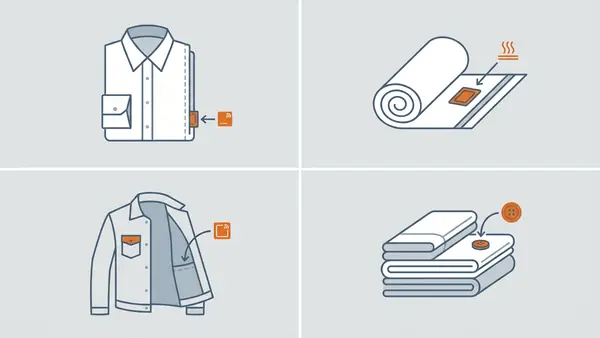
Test placement on real items before bulk production. Read range can change after folding, stacking, sewing, washing, and packing. Comfort also matters: a stiff tag in the wrong seam can irritate the wearer even if the RFID performance is acceptable.
Custom Printing, Encoding, and RFQ Checklist
Custom RFID laundry care labels often need more than a blank RFID tag. Buyers may request logo printing, care symbols, human-readable serial numbers, barcode backup, QR codes, EPC encoding, data files, roll packaging, or bulk packaging.
Use this RFQ checklist:
| RFQ field | Details to provide |
|---|---|
| Textile item | Linen, towel, scrub, robe, uniform, workwear, garment, or rental item |
| Workflow | Hotel, hospital, laundry service, apparel retail, rental, or manufacturing |
| Tag format | Care label, textile tag, silicone tag, PPS button, pouch, or heat-seal tag |
| Size and feel | Finished dimensions, softness, thickness, color, edge finish |
| Wash process | Temperature, chemicals, drying, pressing, sterilization, cycles |
| Attachment | Sewing, heat seal, pouch, button, embedded label, or custom method |
| Frequency and chip | UHF/HF/NFC, chip model, memory, protocol, regional band |
| Encoding | EPC structure, GS1 data, serial range, TID use, user memory, passwords |
| Printed data | Logo, care text, barcode, QR code, serial number, customer code |
| Packaging | Rolls, sheets, pieces, roll direction, quantity per bag, data report |
| Testing | Sample quantity, tagged items, reader setup, wash test, pass/fail criteria |
If the label is used as a legal garment care label, visible care information still matters. The U.S. Federal Trade Commission explains that covered manufacturers and importers must attach care instructions and have a reasonable basis for them in its Care Labeling Rule guidance. RFID can add digital identity, but it should not remove required physical labeling where regulations apply.
When requesting a quote, send RFIDEcho the textile type, laundry environment, attachment plan, frequency, chip, printing artwork, encoding file, sample testing needs, and estimated annual quantity. RFIDEcho can help confirm tag material, chip, frequency, size, printing, encoding, numbering, color, and packaging options. For custom project discussion, use the contact page.
FAQ
Can an RFID laundry care label replace a normal care label?
It can be integrated into a care-label-style format, but legal care instructions, fiber content, country of origin, or brand requirements may still need visible printed information depending on the market. Treat RFID as added digital identity, not an automatic replacement for required labeling.
What is the best RFID frequency for laundry care labels?
Passive UHF is usually best for bulk laundry and textile tracking because it supports longer read range and multi-tag reads. HF or NFC may fit close-range or phone-interaction use cases, but they are less common for high-volume laundry counting.
How many wash cycles should custom RFID laundry labels survive?
There is no single answer. Many laundry tag products claim 100–200+ cycles, but the correct target depends on the textile value, replacement cycle, wash temperature, drying, chemicals, and pressing process. Test samples in the real laundry workflow.
Can RFID laundry labels include a barcode or QR code?
Yes. Many custom labels can include a logo, barcode, QR code, human-readable serial number, or care text. If the printed code is used operationally, specify print durability and verify that it remains readable after washing and abrasion.